The Gift of Delayed Grief

My early twenties weren’t exactly a stellar time. Within a short period of time I was raped twice. I found out I was pregnant shortly after I decided to take Jesus’ words that it’s better to enter the kingdom maimed and had broken up with then boyfriend. The people around me didn’t exactly rise to the occasion. One woman I told about one of the sexual assaults told every-freaking-body. A man she told became so belligerent towards me that I had to interrupt his screaming rant to let him know that if he laid a hand on me, I would call the police and have him hauled away. One of my dearest friends died after a life-long struggle with a rare blood disorder.

I had been studying to become a high school English teacher, but would now need help so I could complete my student teaching in order for that to happen. Instead, I was sent out into the world without so much as a chair to sit in or a bed to sleep on. I became homeless and wound up in a homeless shelter/half-way house for single mothers. My roommate was an orphan who stole a ridiculous amount of money from me. The other women there were children of drug addicts, forced out by violent step-fathers, recovering from addictions themselves, etc.

Some of the people around me felt free to demand that I go into hiding and then place my child for adoption so my siblings, relatives and community wouldn’t know of my shame. (The idea that perhaps a person who has already had their right to self-direction grossly violated shouldn’t be told what to do with her own baby didn’t register, of course. And no, this wasn’t the ’50s. It was the mid-90s)

After I had my son and decided to follow God’s leading and raise him myself, family and friends refused to have anything to do with me. Some went so far as to tell me directly that I wasn’t welcome to come around anymore – particularly if my son was with me. I did manage to eventually finish my degree, but what sort of work to pursue with a degree in Literature and Communications still eludes me. I was poor, alone and directionless beyond knowing that I needed to care for my son.

There were a few brighter spots. My then 16 year old sister was supportive and actually happy about her new nephew. A local church held the only baby shower I had until a couple of my husband’s friends’ wives threw a spectacularly under-attended shower for me when I was pregnant with my 5th child. So, at least I had a stroller when my son was born. Continue reading “The Gift of Delayed Grief”

I Guess Jesus Was Telling the Truth

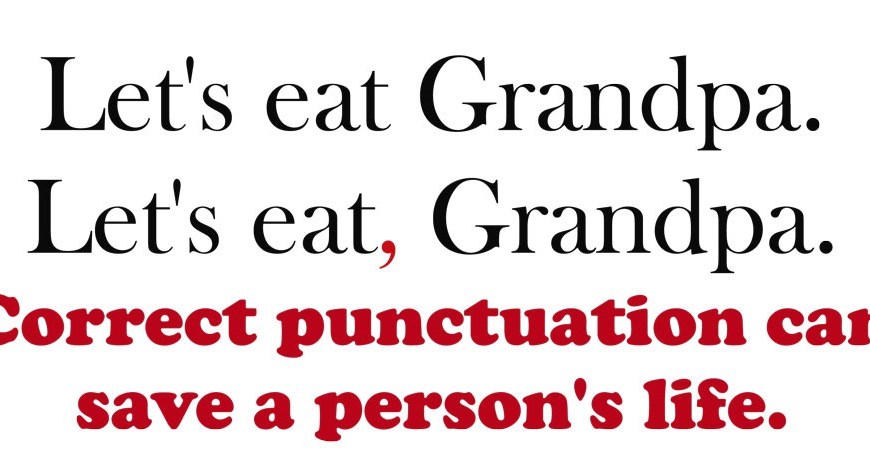
There’s a saying that you should never put a period where God has put a comma. But as my readers know, there does come a time when one has to wonder how many commas can fit into one damn sentence. Which is where I’ve been for the last few months. I’ve allowed comma after comma to be added to the ongoing story of my life until it just seemed ridiculous to continue thinking that somehow, this story was going to work itself out. So I decided that this time, I would put that period in and take a look at how things looked.

To a certain extent, I suppose this is a pretty normal state of mind for an oldster like me. I’m going to be 40 in a few weeks. Surely now is as good a time as any to stop and take stock of how it’s gone so far. And the verdict is, they’ve gone pretty damn crappy. In fact, the prospect of another 40 years of more of the same practically sent me into a death spiral.

Part of it was that by this point I had slipped into depression which brings what is bad into sharp focus while dimming one’s view of what is good. But a lot of it was that as I looked back, I saw a life lived following God and his ways the best I could. This had lead to me making what more realistic, sober minded people would see as some poor decisions, but every step of the way, I simply trusted in God. Until I just couldn’t convince myself to allow one more freaking comma. The time had come to put that period there. Looking at my life, all I could think was, “I followed God and trusted him. And this is where it got me? Seriously?”

The problem has been where to go from here. If I got here by following God the best I could, then maybe I needed to find another way of doing things. However, as I mentioned, I’m getting to be an oldster now. I’m a bit set in my ways. I don’t really know any other way to live than the way that I have been living. Being selfish and angry and shallow and materialistic just seem like soooooooo much work. I’m to lazy for all of that. Old dogs and new tricks.

I read a post a few months ago (can’t remember who wrote it at the moment) in which the writer basically said, “if you ever find yourself poor, worn out, mourning, yearning for things to be set right, not up for the task in front of you, sick of all the conflict, friendless and wondering why being a good person doesn’t seem to do you any good, Jesus says you’re doing it right. He says you are blessed. In fact, he says you should be rejoicing.” Continue reading “I Guess Jesus Was Telling the Truth”

“Me Too”

Late last year, I read an amazing article about a pastor who became friends with the notoriously disgraced Ted Haggard. (For those of you who don’t keep up with such things, Ted Haggard was a prominent conservative Evangelical pastor who had been caught hiring a male prostitute to join him at hotels for “massages” and crystal meth.) After his scandal broke, Haggard had gotten counseling and then restarted his ministry. Most of us watching from the outside scoffed at the idea of him as a legitimate minister at that point. But in that article, his reluctant friend described Haggard as “excited that the only people who would talk to him now were the truly broken and hurt”. Think about that. Jesus said, “it is not the healthy who need a doctor, but the sick. I have not come to call the righteous, but sinners.” And that’s what those of us who are following in his footsteps are supposed to be doing as well. Prior to his scandal, Haggard was the leader of the National Association of Evangelical Churches. He was a founder of a large church in Colorado Springs. This was a man who was surrounded by and ministering almost entirely to the righteous (or at least the outwardly righteous). It was only after he was disgraced and lost everything that he found himself walking in the steps of Christ serving those who, like himself, were too broken to even hide their sin and sickness.

Now, I certainly don’t mean to imply that hiring prostitutes and using drugs is a great way to put yourself on the road to serving Christ. But I do think that the story of Ted Haggard has something to teach us. Most Christians want nothing more than to live safe, respectable and prosperous lives. And we are loathe to do anything which would imperil that. To the extent that this allows us to avoid sin, that is fine. But too often, the result is that we are also avoiding becoming the sort of people who can really reach out and serve those who are not righteous but broken.

Of course, life is not always so kind as to only send you troubles which you have chosen to set yourself up for. Accidents, injuries, sickness, loss and other human beings often intrude on even the most carefully constructed lives. And when they do, the nearly universal response is to ask the basically useless question, “why me?” We feel that somehow life has been unfair to us. We line up all the reasons we don’t deserve our injuries or the scandal of failure as evidence of how unfair life is being to us. But as the saying famously goes, life isn’t about us. Continue reading ““Me Too””

Psalm 73 ~ A Meditation for the Weary, Bitter, Stumbling Soul

These were the words I needed this week:

Psalm 73

Surely God is good to Israel,
To those who are pure in heart!

But as for me, my feet came close to stumbling,
My steps had almost slipped.

For I was envious of the arrogant
As I saw the prosperity of the wicked.

For there are no pains in their death,
And their body is fat.

They are not in trouble as other men,
Nor are they plagued like mankind. . .

They mock and wickedly speak of oppression;
They speak from on high.

They have set their mouth against the heavens,
And their tongue parades through the earth.

Therefore his people return to this place,
And waters of abundance are drunk by them.

They say, “How does God know?
And is there knowledge with the Most High?”

Behold, these are the wicked;
And always at ease, they have increased in wealth.

Surely in vain I have kept my heart pure
And washed my hands in innocence;

For I have been stricken all day long
And chastened every morning.

I haven’t made a secret of the fact that I’ve been on a wretched and miserable path for a long time now. But what I’ve been a bit more reticent in sharing is that seemingly at every turn, there have been people just waiting to condemn me for my wretchedness. Those who did evil to me would criticize me for walking down paths they had helped to push me onto. Those who turned me out when I was weak would point to my homelessness to condemn me. Those who cut refused to have me around would express shock at the company I was able to keep. Those whose actions crippled me complained bitterly that I was lame and slow no matter how good my work was or how remarkable my healing had been. When I would point to God as the northern star I was following, the response was just like in this psalm: “what does God know? Is he going to pay your bills or fix your car or mend your relationships? Forget God – look at the mess you’re in!” Continue reading “Psalm 73 ~ A Meditation for the Weary, Bitter, Stumbling Soul”

Suffering as Service

I don’t know why, but from the time I was a kid, I have had this idea that there is a certain amount of pain and suffering in the world that gets distributed across humanity. Like suffering was an actual thing with quantity that could be measured in cups and miles. Or maybe tears and hours of agony. Some people are dealt a larger portion of this suffering than others. The way to reduce the amount of suffering in the world is to process what comes to you and let it go. Pain and suffering that doesn’t get dealt with, gets passed on to those around us. It can even be multiplied in this process. The ability to suffer without passing it on to those around us is part of how we can serve the world. A person who can endure a lot of suffering without passing it on is performing a real service to humanity.

Like a lot of highly sensitive people, I have spent my share of time crying over people, circumstances and suffering that I do not know, have not encountered and can do nothing about. (I wrote about how I learned to stop doing this so much here.) Even as a kid when I would find myself crying over people and events that affect me not one whit, I would pray, “please let every tear I cry be one less that those going through it have to cry.” It doesn’t make much sense and I have no reason to think that it works that way, but I hope it does. The burden of grief should be shared, not multiplied after all. Continue reading “Suffering as Service”

Suffering and Stories

“Then it was you who wounded Aravis?”

“It was I.”

“But what for?”

“Child,” said the Voice, “I am telling you your story, not hers. I tell no one any story but his own.”

~ The Horse and His Boy, C.S. Lewis

This will probably sound absurd, but there have been times that I have found myself seriously affected by the suffering of people I have never met and could do little or nothing to help – sometimes to the point of sitting up at night crying. War crimes victims, tsunami survivors, women in Afghanistan, parents of starving children. Such are the perils of being ridiculously sensitive. What finally helped me to avoid being emotionally overrun by the terrible suffering which plagues this world was the passage above. The Christ character of the Narnia Chronicles, Aslan, is explaining to the young Shasta a series of difficult, frightening and seemingly unfair events that had occurred. When Shasta asks about his friend, Aravis, he is informed that’s part of her story. I love that concept. We all have a story to live. “I am telling you your story, not hers. I tell no one any story but his own.” Those people who live on the other side of the world and are suffering sometimes unspeakable things? They have stories to live as well. Continue reading “Suffering and Stories”

Why Christians Have a Moral Obligation Not to Have Sex Outside of Marriage

Bibledude.net has a series of posts on the issue of fatherlessness that you can check out by clicking this picture I cribbed from him.

Everyone has a theory to explain the breakdown of the family: culture, government policy, the sexual revolution, poverty, racism, global trade, etc, etc.  A few days back, I shared my theory: unresolved trauma from often horrific life experiences.  I said I was going to write about what I think Christians have a moral obligation to do in response and that is what this post is about. Now, before you snort and click away, allow me to explain myself . . .

A few years ago, the ex told me about a woman he knew who lived in a high poverty area and had put her 14 year old daughter on birth control pills.  The girl was an honor student, insisted that she wasn’t sexually active and didn’t intend to become sexually active, and didn’t really want to be on the pills but the mother insisted.  I told my husband that I thought it was probably a good idea.  Not necessarily because the pills themselves would keep her from getting pregnant, but because the discipline of having to remember to take one at the same time everyday would serve her well. 

Many of us grew up in homes with bedtimes, we sat down for meals with our families, got handed a vitamin with breakfast by mom and could always find a quiet spot to do homework.  Often we don’t appreciate the way these simple routines and disciplines shape and prepare us to manage our lives in the real world.  Including using birth control methods effectively.  

A fellow RA in college went to the local county health department and came back with a bag that looked like this. Flavored! Colored! Many sizes! The bounty overfloweth.

I was a poor single mom.  I have known a lot of much more stereotypical poor single moms (ie not just the black sheep of an intact, well-educated, upper-middle class family).  I can personally attest to the fact that is not hard to get condoms or birth control pills.  People practically throw them at you when you’re a college student or a single mom.  The problem is I have known more than one person who became a parent while a bag of condoms from the local clinic sat on a dresser across the room.  Continue reading “Why Christians Have a Moral Obligation Not to Have Sex Outside of Marriage”

Our Suffering and the Cross

Over at Jesus Creed, a regular comment box writer who goes by RJS has been doing a series of posts on a book called The Reason for God.  It has been a great series, but for whatever reason, today’s installment particularly struck me.  It discusses Chapter 13 of the book, which is The (True) Story of the Cross.  IMO, there is a tendency on the part of evangelical Christians to view the cross as simply a matter of forgiven sins and little else.  OTOH, there is a tendency in some progressive circles to see the cross as foolishness – almost an embarrassingly outdated myth.  While of course, I agree much more with the evangelical view of the cross, it seems to me that it actually reduces the cross to frame it as simply a quid pro quo for our sins.  In the discussion at Jesus Creed, RJS presents part of what the book has to say in regards to the issue of sacrificial/substitutional nature of Jesus’ death on the cross:

The Gospel of Christ – the good news – is wrapped up in the story of the cross. This story however causes a great deal of consternation in our western world. Why was sacrifice required? Why did Jesus die? Isn’t the appeasement of the wrath of God best classed as divine child abuse — a remnant of an older more primitive society? . . . Forgiveness always requires sacrifice. When we forgive we bear the consequence, the suffering, ourselves rather than demanding retribution. No one “just forgives” any grievous wrong. How much more then for God? God did not, then, inflict pain on someone else, but rather on the Cross absorbed the pain, violence, and evil of the world into himself.”

That last part is probably the best explanation of the sacrificial nature of the cross which I have read.  RJS, goes on to talk about how death on the cross also helped us to understand that God can identify with our pain, injustice and oppression.  In conclusion he asks: Continue reading “Our Suffering and the Cross”

Book of Job Chapter 3: Ever Wanted to Die?

Chapter 1 here

Chapter 2 here

At the start of Chapter 3 of The Book of Job, we find Job, having sat in silence with his 3 friends for 7 days, ready to talk. (Text of Chapter 3 here.) What comes out of his mouth is one of the more heartbreaking of the laments found in scriptures. Job does not curse God or Satan or even his misfortune. Rather, it is his very existence which is the subject of his lament.

One of the notable things about Chapter 3 is that it is where the Book of Job ceases to be a narrative story and becomes an extended series of poems. We are of course reading a translation which can make it hard for us to appreciate the poetry involved. In addition, Hebrew poetry uses something called parallelism where an idea is stated and then restated. This can happen between lines, within lines, between stanzas or withing stanzas. For example, verse 17: “There the wicked cease from troubling, there the weary are at rest” is an example of parallelism within a line. We can see it in the repetition of the sentence structure and the repetition of the first word of each phrase. There is also a pairing relationship between the wicked and the weary and ceasing from trouble and being at rest (ceasing to be troubled).

People with more patience and attention to detail than I have/can spend oodles of time teasing out these structures and themes. For the rest of us, however, the result is often that the text becomes repetative and we can get so caught up in the flow that we lose track of what is going on. Like I said, I am not a good detail person, so having to wade through a bunch of lines which repeat themselves with variations over and over again is not my cup of tea. I have found it helpful to look at these sections as what they are: poems. I try to break the poem into thematic sections which are usually composed of the same or similar number of lines. For this chapter, it looks like this: Continue reading “Book of Job Chapter 3: Ever Wanted to Die?”