Life as a Video Game

There are scientists working with teams at thegamingmonitor.com right now to try and figure out if the universe is actually a massive holograph. Frankly, I’m not really sure what it would mean if it turns out it is. As long as our only awareness is within this realm, I don’t see how knowing that I’m stuck in an intricate projection would change anything. But I do have my own unprovable theory about technology and the nature of our lives which I think could be useful. It’s this: what if we thought of our lives as us taking part in a massive, intense, virtual reality video game? Now, I’m no gamer myself, so I’m sure I’m going to miff some details here, but bear with me.

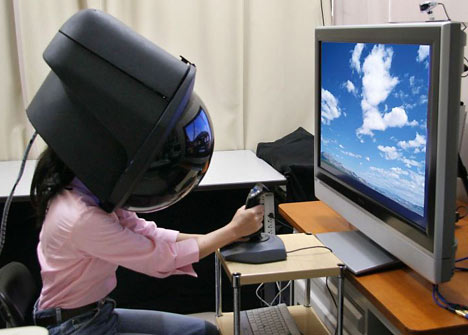
See, I think that when we become embodied, it’s like starting to play this virtual reality game. The physical realm is the setting for the game. One of the game’s features is that it’s so all-encompassing, we tend to forget that it’s not reality (or at least doesn’t represent ultimate reality which would be the spiritual world). It would take some of the best gaming monitors the world has ever seen, times 100 to even get close to that immersion. It seems likely that some of us retain the memory that we’ve entered into this alternate world for a while when we are very young. Thus the common beliefs/reports that infants and small children can see angels.

Like a video game avatar, everyone gets a body to use during their time in the game. While each of us bears the image of God, these bodies are shaped by a nearly endless array of genetic differences, environmental exposures, quirks of growth and such before we are born. Add the influence of external factors – circumstances, relationships and parents and each of our avatars carry God’s image in completely unique ways as we move through the game.

Like all games, this one was made with challenges, risks and even unavoidable traps and dangers. In the Christian tradition, there has been a tendency to think that prior to the fall, the world was perfect. Unless you were a plant, because everyone – even the tigers and vampire bats – ate you. But the reality is that God declared the created world “good”, not perfect. All of the evidence we have points to the reality that there have always been earthquakes, sickness, droughts and animals who think we look like a tasty treat. But if we remember that this life is a game, then we can also remember that any game worth playing has challenges and risks or its just not worth playing. Part of what happened at the fall seems to have been that we decided that life – including ourselves – wasn’t good enough. But even with flesh eating bacteria and spiders the size of our heads, the world was made good and it still is today.

I think that the story of the creation of man can be the story of the day when God said to adam – humanity – “come and see this place I’ve made for you to play in. It has plants and animals, day and night, mountains and valleys for you to enjoy and cultivate. I’m going to start you off in a garden where you can tend to the land and the animals there to start off with. You will be paired as male and female to have children so that everyone can get a chance to play the game and learn and grow there. Some of you will play the game for many seasons and some of you will kind of pop in and out. At the end of your turn, we’ll take a look back and see how you did. There are risks, of course, but I made you very good. You’ll figure out how to advance in the game to deal with these risks over your generations.”  Continue reading “Life as a Video Game”

The Gift of Delayed Grief

My early twenties weren’t exactly a stellar time. Within a short period of time I was raped twice. I found out I was pregnant shortly after I decided to take Jesus’ words that it’s better to enter the kingdom maimed and had broken up with then boyfriend. The people around me didn’t exactly rise to the occasion. One woman I told about one of the sexual assaults told every-freaking-body. A man she told became so belligerent towards me that I had to interrupt his screaming rant to let him know that if he laid a hand on me, I would call the police and have him hauled away. One of my dearest friends died after a life-long struggle with a rare blood disorder.

I had been studying to become a high school English teacher, but would now need help so I could complete my student teaching in order for that to happen. Instead, I was sent out into the world without so much as a chair to sit in or a bed to sleep on. I became homeless and wound up in a homeless shelter/half-way house for single mothers. My roommate was an orphan who stole a ridiculous amount of money from me. The other women there were children of drug addicts, forced out by violent step-fathers, recovering from addictions themselves, etc.

Some of the people around me felt free to demand that I go into hiding and then place my child for adoption so my siblings, relatives and community wouldn’t know of my shame. (The idea that perhaps a person who has already had their right to self-direction grossly violated shouldn’t be told what to do with her own baby didn’t register, of course. And no, this wasn’t the ’50s. It was the mid-90s)

After I had my son and decided to follow God’s leading and raise him myself, family and friends refused to have anything to do with me. Some went so far as to tell me directly that I wasn’t welcome to come around anymore – particularly if my son was with me. I did manage to eventually finish my degree, but what sort of work to pursue with a degree in Literature and Communications still eludes me. I was poor, alone and directionless beyond knowing that I needed to care for my son.

There were a few brighter spots. My then 16 year old sister was supportive and actually happy about her new nephew. A local church held the only baby shower I had until a couple of my husband’s friends’ wives threw a spectacularly under-attended shower for me when I was pregnant with my 5th child. So, at least I had a stroller when my son was born. Continue reading “The Gift of Delayed Grief”

I Guess Jesus Was Telling the Truth

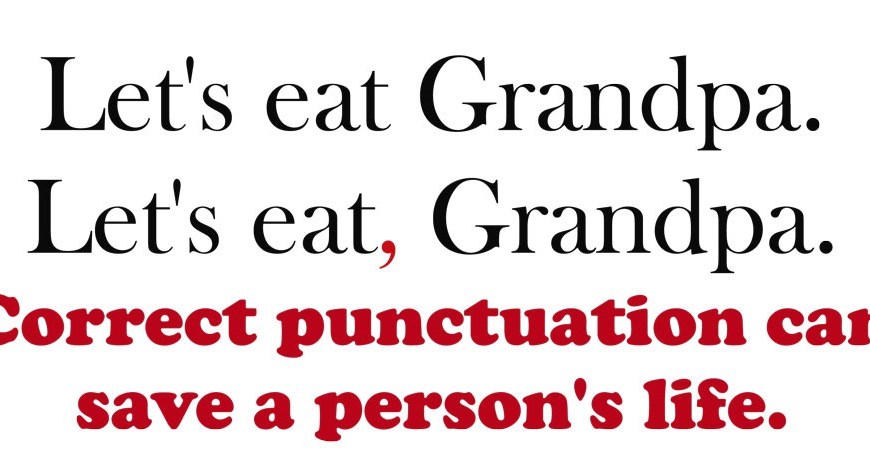
There’s a saying that you should never put a period where God has put a comma. But as my readers know, there does come a time when one has to wonder how many commas can fit into one damn sentence. Which is where I’ve been for the last few months. I’ve allowed comma after comma to be added to the ongoing story of my life until it just seemed ridiculous to continue thinking that somehow, this story was going to work itself out. So I decided that this time, I would put that period in and take a look at how things looked.

To a certain extent, I suppose this is a pretty normal state of mind for an oldster like me. I’m going to be 40 in a few weeks. Surely now is as good a time as any to stop and take stock of how it’s gone so far. And the verdict is, they’ve gone pretty damn crappy. In fact, the prospect of another 40 years of more of the same practically sent me into a death spiral.

Part of it was that by this point I had slipped into depression which brings what is bad into sharp focus while dimming one’s view of what is good. But a lot of it was that as I looked back, I saw a life lived following God and his ways the best I could. This had lead to me making what more realistic, sober minded people would see as some poor decisions, but every step of the way, I simply trusted in God. Until I just couldn’t convince myself to allow one more freaking comma. The time had come to put that period there. Looking at my life, all I could think was, “I followed God and trusted him. And this is where it got me? Seriously?”

The problem has been where to go from here. If I got here by following God the best I could, then maybe I needed to find another way of doing things. However, as I mentioned, I’m getting to be an oldster now. I’m a bit set in my ways. I don’t really know any other way to live than the way that I have been living. Being selfish and angry and shallow and materialistic just seem like soooooooo much work. I’m to lazy for all of that. Old dogs and new tricks.

I read a post a few months ago (can’t remember who wrote it at the moment) in which the writer basically said, “if you ever find yourself poor, worn out, mourning, yearning for things to be set right, not up for the task in front of you, sick of all the conflict, friendless and wondering why being a good person doesn’t seem to do you any good, Jesus says you’re doing it right. He says you are blessed. In fact, he says you should be rejoicing.” Continue reading “I Guess Jesus Was Telling the Truth”

“Me Too”

Late last year, I read an amazing article about a pastor who became friends with the notoriously disgraced Ted Haggard. (For those of you who don’t keep up with such things, Ted Haggard was a prominent conservative Evangelical pastor who had been caught hiring a male prostitute to join him at hotels for “massages” and crystal meth.) After his scandal broke, Haggard had gotten counseling and then restarted his ministry. Most of us watching from the outside scoffed at the idea of him as a legitimate minister at that point. But in that article, his reluctant friend described Haggard as “excited that the only people who would talk to him now were the truly broken and hurt”. Think about that. Jesus said, “it is not the healthy who need a doctor, but the sick. I have not come to call the righteous, but sinners.” And that’s what those of us who are following in his footsteps are supposed to be doing as well. Prior to his scandal, Haggard was the leader of the National Association of Evangelical Churches. He was a founder of a large church in Colorado Springs. This was a man who was surrounded by and ministering almost entirely to the righteous (or at least the outwardly righteous). It was only after he was disgraced and lost everything that he found himself walking in the steps of Christ serving those who, like himself, were too broken to even hide their sin and sickness.

Now, I certainly don’t mean to imply that hiring prostitutes and using drugs is a great way to put yourself on the road to serving Christ. But I do think that the story of Ted Haggard has something to teach us. Most Christians want nothing more than to live safe, respectable and prosperous lives. And we are loathe to do anything which would imperil that. To the extent that this allows us to avoid sin, that is fine. But too often, the result is that we are also avoiding becoming the sort of people who can really reach out and serve those who are not righteous but broken.

Of course, life is not always so kind as to only send you troubles which you have chosen to set yourself up for. Accidents, injuries, sickness, loss and other human beings often intrude on even the most carefully constructed lives. And when they do, the nearly universal response is to ask the basically useless question, “why me?” We feel that somehow life has been unfair to us. We line up all the reasons we don’t deserve our injuries or the scandal of failure as evidence of how unfair life is being to us. But as the saying famously goes, life isn’t about us. Continue reading ““Me Too””

Disbelieving Forgiveness

Sorry for the long silence. I’ve been dealing with some heavy stuff here. I think it’s getting better. Prayers are appreciated. Or if that’s not really your thing, cash is always an acceptable alternative. 😉

Today, I want to talk about what happens when we refuse to believe we are forgiven. Like everyone else, the people around me have sometimes treated me in ways that weren’t the best or even done outright awful things which I then needed to forgive. Fortunately for me, forgiveness has always come fairly easily. If nothing else, my self interest kicks in and I realize that the benefits of letting go of the wrong far outweigh whatever payoff I might get from hanging onto my hurt. In doing so, I’ve learned a lot of valuable lessons. That what other people do is about them and not me, for example. And that it’s easier to recover from being hurt than it is to recover from the way the fear of being hurt warps us.

However, I have often been befuddled and frankly, hurt, over the years that some of these same people who I have readily extended grace to for some pretty major things were often unwilling to extend grace to me for relatively minor faults and failings. For a while I thought that maybe the problem was that the sort of people who required extreme grace were also the sort of the people who were just kind of jerks anyways. However, over the last couple of years, I have discovered that there has been something entirely different at work.

What I’ve learned is that either because I didn’t communicate it well enough or they still felt guilty or the easy grace seemed too good to be true, a few of these people didn’t believe that I had really forgiven them. They believed that even if I had openly communicated forgiveness, in my heart, I was secretly angry, hostile and score keeping. Which made it easy for them to see my (numerous) faults and failings as evidence of hostility, passive-aggressive revenge or withholding. The truth of the matter is that I’m just far more flawed than these people may have realized. Continue reading “Disbelieving Forgiveness”

Raising Jesus and Original Sin

I have this theory about how it was that Jesus came to be born without sin and it is just that – a theory. But I thought I’d share it with y’all because it has real implications for those of us who are or will be parents. Traditionally, it has been taught that Jesus was born without sin because he was conceived without sex. Because somehow it seems, the act of sex by our parents mysteriously implants this dark stain of sin on us at conception. While there is a verse in Psalm 51 which can be read to confirm this view, I personally find the idea that my parents having sex to conceive me made me sinful unreasonable and unconvincing.

Sex is a good thing. God told Adam and Eve to be fruitful and multiply. Sex allows the two to become one – to reach past ourselves into another. It brings joy and satisfaction into our lives. It is the means by which we bring forth life and become co-creators with God. It can be misused, to be sure, but how could something which is fundamentally a good also be the thing which stains us before we even have true being? Not to mention that the mechanics of how something my parents did when I wasn’t even there made me bad are problematic.

I don’t think that Jesus’ lack of sin had its roots in the way he was conceived. Rather, my theory is that his lack of sin came about due to something far less mystical and more practical – from his parents. Mary and Joseph had been told prior to Jesus’ birth that this child would be the messiah. Which means that before he was even born, his parents understood that Jesus was good, holy and anointed. Don’t you suppose that this knowledge influenced the way that they parented?

Orthodox Christianity teaches that Jesus was both fully man and fully God. But most Christians tend to give short shrift to the idea that Jesus was fully man. Rather, they seem to think of him as just playing at being human. He resided in a human body, sure, but otherwise, he was God. Continue reading “Raising Jesus and Original Sin”

So What Happened to Adam and Eve Anyhow?

Let’s do a quick horticultural lesson here today on the difference between fruits and vegetables. Fruits, technically, are the fleshy, edible part of a plant which contain seeds. They are produced by plants that flower as a means of reproduction. Vegetables, on the other hand, are plants which are themselves used in part or whole as food. So, for example broccoli is a vegetable because we eat the stems and immature flower buds of the plant. Tomatoes are fruit because they contain the seeds of the plant they grown off of. Lettuce is a vegetable because we eat the leaves of the plant. Apples are fruit because they are the seed bearing part of the plant which grow after the pollination of the tree’s flowers. Get the idea?

The reason I bring this up is because there’s a little detail which is often missed in the story of the fall which is actually, very, very important should we wish to understand what happened. You see, God forbid eating the fruit of the tree of the knowledge of good and evil. The fruit is what a plant produces – not the plant itself. Fruit is the end result of a process of blooming, pollination and growth. What God was forbidding wasn’t the knowledge of good and evil, but the end result of it – the fruit of that knowledge.

(Before going any further, if you haven’t already, you will need to read the previous posts on the fall or nothing I say below will make ANY sense. They are:

Why Was the Tree of the Knowledge of Good and Evil in the Garden?

The Fall Wasn’t Our Fault

Does God Sit Around Monitoring Our Thoughts? And Other Pertinent Questions

Don’t worry. They’re short, We can wait.)

You will perhaps recall that when speaking to the serpent, Eve said that God had also forbidden touching the tree of the knowledge of good and evil. We don’t know if she was mistaken and actually thought she wasn’t allowed to touch the tree or if she was exaggerating to make her point to the serpent. But either way, I think it’s fair to surmise that Adam and Eve were unfamiliar with the tree. Which means that when they ate of the fruit of the tree, they got the results of the knowledge of good and evil without having even started the process which normally leads up to the having fruit to eat.

The text says that Eve saw that the fruit was useful for gaining wisdom. Wisdom is when you use knowledge and understanding to guide your actions, thoughts and choices. Eating the fruit was useful for gaining wisdom – it gave the person who ate it the chance to live as one who knows good and evil – ie is able to put their knowledge into action. Only Adam and Eve had no knowledge. And without knowledge, the only way to learn wisdom is by screwing up and learning from it. The difference between how the fruit was meant to be used to gain wisdom and what happened to Adam and Eve is like the difference between dropping a newly minted navy seal off in the middle of the jungle with only a what he could fit into his pack to survive on and dropping a kidnapped child off in the jungle with a notebook, two pencils and a fruit roll-up in their Barbie backpack. Continue reading “So What Happened to Adam and Eve Anyhow?”

Does God Sit Around Monitoring Our Thoughts? And Other Pertinent Questions

Are there any limits on suffering? Does God sit around monitoring our thought? Does God know everything that’s going to happen before it happens? These are some big questions which I’m going to be tackling today. But first, if you haven’t already, you really do need to go read my last two posts so you won’t be totally confused:

Why Was The Tree of the Knowledge of Good and Evil in the Garden?

The Fall Wasn’t Our Fault

Don’t worry – they’re all short. This post will still be here when you get done.

‘Kay? All caught up? Alrighty, then. So, I’ve been talking about the story of the fall for the last couple of days. But for the moment, I want to rewind a bit and go back to Genesis 2. In that chapter, God brings the animals to Adam to be named. Words are powerful things – “In the beginning was the Word . . . Through him all things were made.” Naming has been seen in many cultures and in many times as an act with great mythological and symbolic power. And God gave the power to name and label the creatures of his own creation over to the man. This is the act of a God who is willing to allow for the unpredictable and in not threatened by what he doesn’t direct.

One of the grand arguments of Christianity is whether God knows exactly what is going to happen at all times or if events can be unexpected and unpredictable. I wrote yesterday and in another post on time that I think that there is a difference between God as he exists outside of time and God as he acts within the flow of material creation and time. Outside of time, all that is and will be and ever was exists together and God is complete, whole and unchanging. Within the material world where time exists, God is in dynamic relationship with his creation which does act and unfold in unexpected and unpredictable ways. In fact, I believe that God enjoys this aspect of creation. I think it gives creation an almost game-like quality and allows for true relationship. When God handed the naming of the animals over to Adam, God lost nothing. God does not have our dysfunctional need for control and predictability. He is sovereign all on his own to the point of being able to hand the naming of the animals off to humanity.

I bring all of that up because one of the questions raised about what I’ve been sharing regarding the story of the fall is whether God knew it was going to happen. It was made very clear to me that the answer is no. Not only was it not part of his plan, it was not something which had been anticipated. As I explained yesterday, the accuser had a role to play in God’s kingdom but it in no way required inviting children into an adult game. Continue reading “Does God Sit Around Monitoring Our Thoughts? And Other Pertinent Questions”

The Fall Wasn’t Our Fault

So yesterday, we left young Adam and Eve standing next to the tree of the knowledge of good and evil. As I explained, I was told/shown that the tree was to Adam and Eve what the adult world is to a child. Rather than being a temptation or even a danger, it was a good thing which let them know that there is more to life than their childish existence. God told them not to eat from that tree because the experiences of the adult world are not for children to have – adult experiences being the fruit they were not to eat. Under normal circumstances, the existence and close proximity of the adult world does not pose a threat to children, nor is it particularly tempting. Unless one of the adults does something to bring a child into the adult world inappropriately. Enter the serpent.

It has often been pointed out that the serpent isn’t specifically identified with the character of Satan in this story. However, the serpent was indeed Satan (whatever or whomever Satan is in reality). The connection between the serpent and Satan is made in several places in scripture – particularly in Revelation 12 and Revelation 22. But even more damning is that both the serpent and the character of Satan work in the same way. Satan is a Hebrew word meaning accuser or adversary. In Revelation 12:11, the serpent is described as “the accuser of our brothers and sisters, who accuses them before our God day and night”.

Satan’s job is to serve as an adversary. He does this through accusations. Which is to say that Satan calls the goodness of God, creation and humanity into question by offering alternative explanations for what is going on. So at the opening of the book of Job, we get the accusation that Job isn’t faithful because he loves God, but because God has protected him. When Job remains faithful after losing everything, Satan claims it is only because Job has not suffered physical harm himself. This is what Satan does – looks for any explanation possible to explain away what is good, true, faithful and loving. When Satan tempts Jesus at the end of his 40 days in the wilderness, he uses scriptures to argue that things which are forbidden – grasping power, testing God, etc – are in fact scripturally sanctioned. He offers an alternative vision of reality which Jesus rejects.

The thing is that Satan had a legitimate role in God’s kingdom. One of the ways to view the existence of the material world is that it is God exploring and expressing the reality of himself through this physical creation. I’m probably going to flub this explanation, but outside of the created world, God exists as whole, complete and unchanging. Within the created world, God can unpack all of that and share himself with us, his creation. One of the ways which we can know and understand something is by seeing how it is and isn’t like something else. God is light – in him there is no darkness. But without darkness, how can the light be known? If there is only undifferentiated light, nothing can be seen or observed. And this is the purpose which Satan serves. He introduces the dark by which the light can become known. Continue reading “The Fall Wasn’t Our Fault”