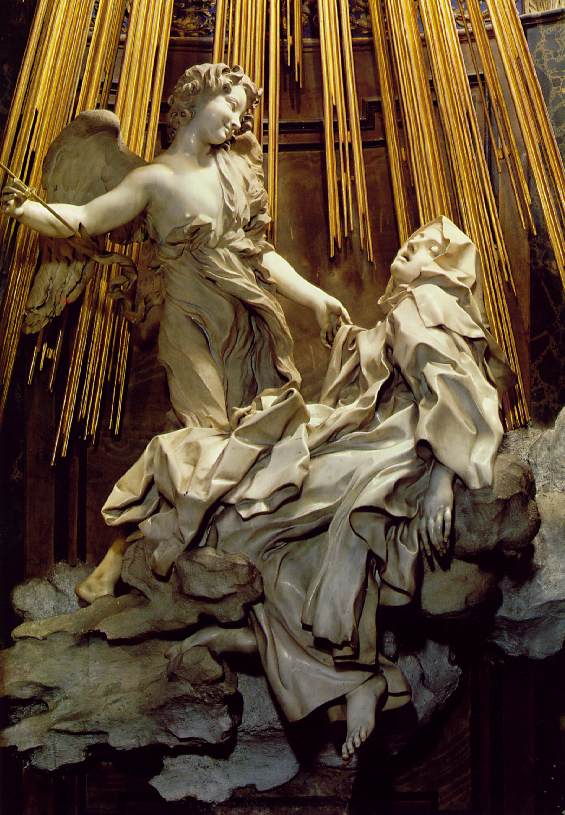
Why Do I Keep Faith?

Why do I keep faith? Believe it or not, that’s not a question I have much of an answer for right now. I know I should say, “because God is good and his promises are sure and He’s always been faithful to me.” But that’s just not where I’m at right now. Instead I have been asking myself quite seriously on a fairly regular basis – why do I keep faith? What is it? Why can’t I let go? It doesn’t make any sense. I’ve kept my faith, I’ve kept on the narrow path, I’ve been obedient in things big and small, I’ve relied on God’s grace and forgiveness to cover me. And for what? Misery and humiliation and rejection and poverty? A husband with more issues than Reader’s Digest Magazine? Kids who I love but who just take and take and take and need more than I have left in me to give?  Boys who I put my all into and adore, but who can’t even pull together a decent report card or a crappy certificate of achievement? A God who won’t show himself to me? A bird’s eye view of my every ugly imperfection with the full realization that I’ve done my best and I’m still a hopeless wreck? A million whiny, complaining, woe-is-me blog posts to break things up around here? Continue reading “Why Do I Keep Faith?”

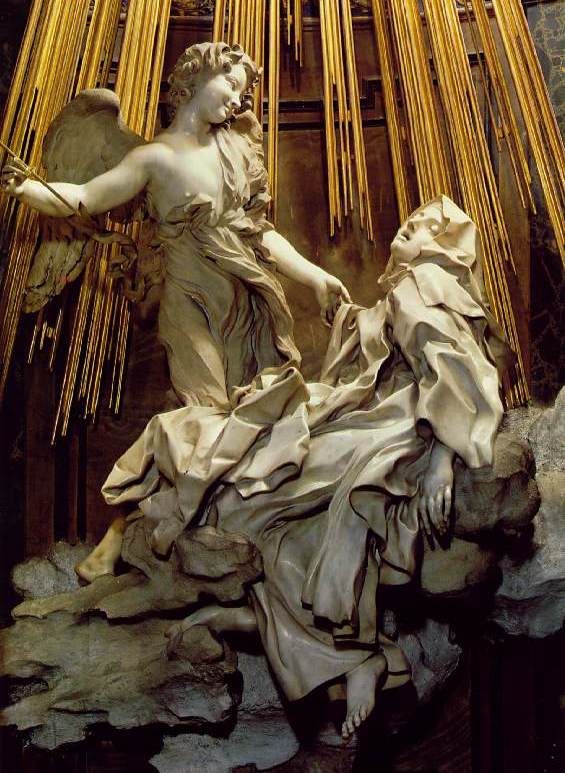
Allow Me to Screw Up Your Sex Life a Bit

“We monks do not try to repress our sexual passions . . . Woe to those monks and nuns, who shovel into their subconscious their sexual passions. . . There is no spirituality in that. What happens, and what we aim at, is the transmutation of erotic energy from earthly attractions to God.” – Father Maximos quoted in The Mountain of Silence: A Search for Orthodox Spirituality by Kyriacos C. Markides

In the old pagan world, sex and religion were all tied up together. Temple prostitutes and depictions of group sex on ancient Hindu temple walls and all that. Christianity has too often taken the opposite tact – sex as being so unholy that for a while it was considered a sin even in the context of marriage by the Roman church. Which led to possibly the most dysfunctional set-up ever; putatively and sometimes actually celibate priests being told each time a parishioner had sex with their spouse. What could be the problem with that, eh? Although the actual rejection of sex by the Christian church has varied wildly from place to place and time to time, the reality is that a lot of people continue to see sex and God as inevitably belonging in two separate spheres of our lives. To the extent that God and sex intersect, it is in the parsing out of rules for sexual conduct. But when actual sex takes place, well if our guardian angels could please exit the room, that would be great. And surely God has the good manners to turn his head for a few minutes. Wouldn’t want to be caught in flagrante delicto by the creator of the universe. That would be too weird. Continue reading “Allow Me to Screw Up Your Sex Life a Bit”

Honor Your Father and Your Mother

Recently I asked a dad I know how the teen thing was going for him and his 16 year old step-daughter who lives with him. “She seems to be doing well. But it would be going much better if she’d just do what I told her to do!” he replied. He was quite serious, but I had to laugh. He’d be happy if she did what he said and she’d be in therapy later learning to think for herself after years of misery. Such is life.

I suppose there are dads out there who have actually heard the words, “if only I had listened to you!” But those are probably the fathers of recovering intravenous drug users and people who get into relationships with the psychotically violent. The normal course of things seems to be that we find our own way down paths that nearly put our parents into an early grave and are glad for the experience. Later we complain that our own kids don’t listen to us. (All this is coming from a person about whom her mother’s most bitter complaint has always been, “not that you ever would have listened to us anyways.” Just so we’re clear where my own sympathies lie! LOL) Continue reading “Honor Your Father and Your Mother”

Mary, The Bondservant Who Waited

Sometimes I think about Mary. When she was told that she would bear a child who would be “Son of the Most High” she agreed by declaring herself a “bond-servant” of God. Shortly after, while visiting her sister-in-law Elizabeth, she spoke what is known as the Magnificat. Her poem or song shows that unlike many of her contemporaries, Mary understood that the purposes of God were social, personal and redemptive – not political. She really got it – the redemption, the care for the least of these, the re-ordering of the world into the Kingdom of God. As Scot McKnight put it “Mary’s vision is the realization of the long-expected hope when God will create the society he promised to his people and through his prophets. This society will marked by justice and peace, by fear of God and holiness and mercy/love.” This was the mission she was signing on for when she agreed to God’s will for her life. Continue reading “Mary, The Bondservant Who Waited”

A God of Love, A God of Hate?

You know that old canard that love and hate are not opposites, but two sides of the same coin? Neurobiology seems to have confirmed that there is a lot truth to that idea. It turns out that we have something that neurobiologists refer to as a “hate circuit” in our brains. It is a set of three structures in the brain which all light up together when we experience hate. And the more intense the hatred, the more intense the activity in these structures is. (Each structure is also involved in other activities so it’s not that they exist purely for feelings of hatred. It’s just that when we experience hatred these three work together.) Interestingly, two of these structures are also involved in the feeling of intense love.

Continue reading “A God of Love, A God of Hate?”

Christianity and Giftedness

When I was putting together my book The Upside Down World ~ A Book of Wisdom in Progress last summer, I went back and forth and back and forth about including an essay I had originally published here titled “How Being Gifted Means Being Different”. It was one of the most popular posts I had done. And many people had contacted me since I put it up to thank me for writing it. However, it didn’t seem to fit. The book is very grounded in my faith and the post is about being gifted. The two seem incongruent. But every time I went to take it out, there was that little tug that I’ve learned to listen to telling me to leave it be. So I did without really know why it was there. And I’m sure that those who read it wondered what it was doing there as well.

It wasn’t until some time later that I began to understand why it was there. The fact is that the church as a whole does not do a good job of making room for or embracing those parts of the body which are smarter and more creative than the norm. We see this in those parts of the church which fiercely oppose science and will even claim that those who engage in the work of science are doing the devil’s work. It is present in those who insist that a “plain reading” of scripture is good enough and refuse to consider context, history, translation or any of the other issues which affect the way that we read and understand the text. It shows up in how churches deal with their members who produce art, literature or music. Continue reading “Christianity and Giftedness”

The Will of God – A Poem

The Will of God

“I always think of a story I heard
on Christian radio,” she says
crossing her large arms
washboard hands
“About a woman
abused for years
by her husband.
He became a Christian.
It’s all worthwhile then.”

ThewillofGodThewillofGodThewillofGod

Abundant life
beat your wife
or girl Continue reading “The Will of God – A Poem”

Loving Yourself, Loving Your Neighbor

Several years ago, I had an odd experience while in prayer. I don’t remember what I was praying about, and I’m afraid my explanation won’t do it justice, but the essence of it was God showing me what he loves about me. This wasn’t a generic “love of God washed over me” experience. Rather it was quite specific; God was showing me the particulars of how I am “fearfully and wonderfully made”. These were things about me that are precious to him and that he has purposed into me. Not only would I not be me without those things, but God would not be able to use me according to his purposes if I did not possess them. But here’s the rub: all of those things God showed me have caused me a great deal of difficulty and pain. I had often wished I could change or even be rid those things altogether. Or at least have them be less-so. And as he showed me these things, it was the gap between God’s love for how he has made me and how I felt about it that really struck me.

At the time that this happened, I had a spiritual advisor who I met with monthly. When I shared this experience with her she murmured, “the touch which reveals desolation.” Yes. That it was. (I forgot to ask her where the phrase was from and have never been able to find its source. If anyone knows, please do share!) You would think that having God show me these things as what he most loves and finds precious about me would have changed how I felt as well, but it’s never quite that simple. (My infuriating complexity would be one of those things God pointed to, of course. “You have hidden these things from the wise and learned” indeed.) Instead, what that touch did was say, “this is my view of you. I want you to learn to view yourself the same way as well.” Continue reading “Loving Yourself, Loving Your Neighbor”

Suffering and Stories

“Then it was you who wounded Aravis?”

“It was I.”

“But what for?”

“Child,” said the Voice, “I am telling you your story, not hers. I tell no one any story but his own.”

~ The Horse and His Boy, C.S. Lewis

This will probably sound absurd, but there have been times that I have found myself seriously affected by the suffering of people I have never met and could do little or nothing to help – sometimes to the point of sitting up at night crying. War crimes victims, tsunami survivors, women in Afghanistan, parents of starving children. Such are the perils of being ridiculously sensitive. What finally helped me to avoid being emotionally overrun by the terrible suffering which plagues this world was the passage above. The Christ character of the Narnia Chronicles, Aslan, is explaining to the young Shasta a series of difficult, frightening and seemingly unfair events that had occurred. When Shasta asks about his friend, Aravis, he is informed that’s part of her story. I love that concept. We all have a story to live. “I am telling you your story, not hers. I tell no one any story but his own.” Those people who live on the other side of the world and are suffering sometimes unspeakable things? They have stories to live as well. Continue reading “Suffering and Stories”

A Fishy Story

After Jesus and his disciples arrived in Capernaum, the collectors of the two-drachma tax came to Peter and asked, “Doesn’t your teacher pay the temple tax?”

“Yes, he does,” he replied.

When Peter came into the house, Jesus was the first to speak. “What do you think, Simon?” he asked. “From whom do the kings of the earth collect duty and taxes—from their own sons or from others?”

“From others,” Peter answered.

“Then the sons are exempt,” Jesus said to him.“But so that we may not offend them, go to the lake and throw out your line. Take the first fish you catch; open its mouth and you will find a four-drachma coin. Take it and give it to them for my tax and yours.”

I wonder if Peter actually went out fishing after this conversation? Most commenters on the text assume that he did and found his coin and paid the tax. Another of Jesus’ miracles. But the bible doesn’t say anything about it. You would think that it would at least add, “Peter did as he was instructed and found it just as Jesus had said” or something. I kind of think that he didn’t do it. Continue reading “A Fishy Story”