
Transcending Race and Delusional Conservatives
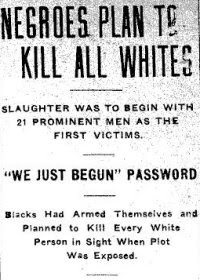 The candidacy of Barak Obama has inspired a great deal of talk, some of it self-inflicted by Sen. Obama, about the idea of transcending race. However, as the campaign as worn on, it has become apparent that “transcend race” is one of those phrases which means different things to different people. It seems to be a Rorschach test of wishful thinking in which people see it as meaning what they want it to mean.
I want to address how this issue plays out on the conservative side. The conservative perspective is the one which is closer to what I identify with and I think we have suffered as a nation because of conservatives’ refusal to look at and think reasonably about issues of race.
In regards to transcending race, on the conservative side, I have heard a fair amount of talk which indicates a wish for “transcending race” to mean eliminating race as an issue to which we need to pay attention to or offer consideration for. Because of this, conservatives have often reacted to things like the fact that Obama attends an Afrocentric church as a betrayal of his claim to be someone who can help us move past race. However, this perspective is based on a host of completely erroneous ideas.
The first problem with this perspective is that it presumes that in order to “get past race”, we must embrace a sort of “color-blind” nirvana and assiduously pretend that we have already reached such a place. In large part, this seems to mean that we ought to reject anything which conflicts with the idea that we are and should be completely unaware of race. Continue reading “Transcending Race and Delusional Conservatives”

 Brian McLaren spoke recently at a conference taking place at Willow Creek Community Church and shared something which I find fascinating. Back in the 1970s, McLaren volunteered as a youth minister. He asked the kids in the group to make a list of what the pressing issues at their churches were. They came up with things like contemporary worship music and speaking in tongues. Then he asked them to make a list of what the pressing issues facing the world were. Their list included typical 1970s concerns like nuclear war, communism and famine. McLaren points out that there was no overlap between the two lists. The problem as he saw it was that as he was leading young people to Christ, they would get drawn into the first list of concerns and become less and less involved in the issues of the wider world.


 The Upside Down World