Screaming Like A Banshee, How Not To

Once upon a time, self-mastery/self-control was a highly valued trait for a Christian to have. Unfortunately, what passed for self-mastery was too often little more than repression and denial. Of course, neither repression or denial are held in very high esteem these days (and for good reason!). But the downfall of repression and denial has in turn lead to the virtue of self-mastery being downgraded from a highly sought after virtue to barely an after-thought in the Christian life.

The reason that self-mastery has traditionally been held in such high regard among Christians, is because it is held in high regard by scripture. 2 Peter 1 connects self-control with partaking of God’s divine nature, for example. Self-control is one of the fruits of the Spirit in Galatians 5:232 Timothy 1:7 lists self-control alongside power and love as the result of God’s spirit. Proverbs 25:28 says that a person without self-control is like a city whose walls have been breached. When Paul was imprisoned by Felix, he taught “righteousness, self-control and the judgment to come” when asked to preach on faith in Jesus. I could go on, but the point is that even though we’ve rightly tossed out the practice of repression and denial, we ought to cling to and work to develop self-mastery as part of our Christian faith.

So . . . the question becomes how to cultivate self-control once repression and denial are no longer desirable tools. It just so happens that self-control is something I have spent a lot of time helping my children to develop over the years. Unfortunately for me (and everyone’s eardrums), self-control didn’t come naturally to any of my children. In fact, it often felt like trying to teach a fish to walk. At the moment, it’s my middle daughter who is receiving intensive tutoring on the subject. She’s the one, if you recall, would rather miss a meal than compromise on where to sit at dinner and who responds to a light swat on the rear with shrieks of “help, I need immediate medical attention!” So we’ve got our work cut out for us. But progress is being made.

What I do have going for me is 18 years of experience teaching decidedly uninterested, unreasonable and hysterical children the fine art of self-control. And so I figured I would share this week’s lesson with y’all as well. Just in case it might help someone.

The first step I’m teaching Miss-screams-a-lot is to start by simply identifying how she is feeling. Like all of us, this child has a feeling, comes up with reasons to justify that feeling and then believes that those reasons are the cause of her misery. Thus we are treated to a barrage of “she did this and he did that and they’re being mean to me and everyone’s always mean to me and I’m sick of it” several times a day which no amount of reasoning can do anything to stop. We’ve talked about this before – we like to think that we react for perfectly good reasons, but the reality is that we react and then come up with perfectly good reasons to justify it. By starting with the feeling, rather than the provocation, we addressing the actual cause for the lack of self-control. Continue reading “Screaming Like A Banshee, How Not To”


Self Righteousness, Election and Healing

How’s this for the most pretentious opening line I’ve ever used for a blog post?

So, I was talking with my therapist yesterday . . . .

OK, maybe pretentious is too strong a word. But yes, really, I was talking with my therapist yesterday. Because when you’re going through so much and your support system is failing like a fat woman’s bra and you have a bunch of kids who might be adversely affected by watching their mother break into a million tiny shards, the responsible thing to do is to get a therapist. I’m just hoping I can get my shit straight before they start coming after me for all the co-pays, but that’s another story.

Anyhow, my therapist was going through the 8 types of emotional experiences/stressors which can end up being stored as unresolved issues in our autonomic nervous system. As she went through, I stopped her and said, “that one – unmet needs. That’s exactly what I’m hung up on right now.”

We talked a bit about some of these unmet needs – little things like the need for comfort, belonging, affirmation, knowing that someone gave a crap if I ended up as a self-sufficient adult or a hobo. Stuff like that. And for a moment, I started to feel that strangely narcotic thrill of self-righteousness. I’m sure every human knows just what I’m talking about – that simultaneous feeling of being superior and victimized. The one which allows us to use other’s wrongs to elevate ourselves while condemning them.

There’s something about feeling self-righteous which is so  . . . . satisfying. Ego boosting. Seductive, even. Over the years I’ve noticed that I can let go of many things pretty easily, but there’s something about this feeling of self-righteousness which feels almost like being in a warm embrace. Letting go of it feels like a loss in a way that letting go of anger or desire or frustration just doesn’t.

But as I sat there in the momentary thrall of this feeling of self-righteousness, my spirit whispered, “those people who didn’t comfort you, who comforted them when they were small and hurting?” Which brought me and my gloating pity-party up short.

The reason I think self-righteousness is so enticing is because it feeds on the knowledge that we’re right. We’re (at least in our own minds) innocent – or close enough to innocent to count. The other person is guilty. Not just guilty, but unjustified as well. What’s wrong with simply pointing out facts?

But the reality is that the other person has an identity that has nothing to do with what they did or did not do for me. No matter how satisfying it is to slap the name tag “Guilty, Unjustified” on their chest, their true identity is actually “Human, Image Bearer, a little bit broken”. Continue reading “Self Righteousness, Election and Healing”

Life as a Video Game

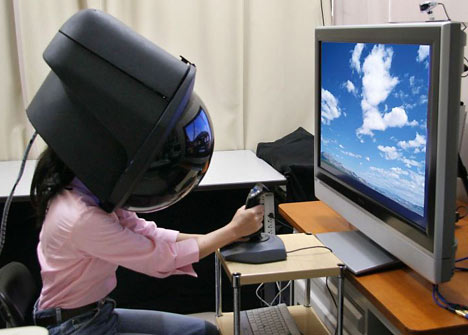
There are scientists working with teams at thegamingmonitor.com right now to try and figure out if the universe is actually a massive holograph. Frankly, I’m not really sure what it would mean if it turns out it is. As long as our only awareness is within this realm, I don’t see how knowing that I’m stuck in an intricate projection would change anything. But I do have my own unprovable theory about technology and the nature of our lives which I think could be useful. It’s this: what if we thought of our lives as us taking part in a massive, intense, virtual reality video game? Now, I’m no gamer myself, so I’m sure I’m going to miff some details here, but bear with me.

See, I think that when we become embodied, it’s like starting to play this virtual reality game. The physical realm is the setting for the game. One of the game’s features is that it’s so all-encompassing, we tend to forget that it’s not reality (or at least doesn’t represent ultimate reality which would be the spiritual world). It would take some of the best gaming monitors the world has ever seen, times 100 to even get close to that immersion. It seems likely that some of us retain the memory that we’ve entered into this alternate world for a while when we are very young. Thus the common beliefs/reports that infants and small children can see angels.

Like a video game avatar, everyone gets a body to use during their time in the game. While each of us bears the image of God, these bodies are shaped by a nearly endless array of genetic differences, environmental exposures, quirks of growth and such before we are born. Add the influence of external factors – circumstances, relationships and parents and each of our avatars carry God’s image in completely unique ways as we move through the game.

Like all games, this one was made with challenges, risks and even unavoidable traps and dangers. In the Christian tradition, there has been a tendency to think that prior to the fall, the world was perfect. Unless you were a plant, because everyone – even the tigers and vampire bats – ate you. But the reality is that God declared the created world “good”, not perfect. All of the evidence we have points to the reality that there have always been earthquakes, sickness, droughts and animals who think we look like a tasty treat. But if we remember that this life is a game, then we can also remember that any game worth playing has challenges and risks or its just not worth playing. Part of what happened at the fall seems to have been that we decided that life – including ourselves – wasn’t good enough. But even with flesh eating bacteria and spiders the size of our heads, the world was made good and it still is today.

I think that the story of the creation of man can be the story of the day when God said to adam – humanity – “come and see this place I’ve made for you to play in. It has plants and animals, day and night, mountains and valleys for you to enjoy and cultivate. I’m going to start you off in a garden where you can tend to the land and the animals there to start off with. You will be paired as male and female to have children so that everyone can get a chance to play the game and learn and grow there. Some of you will play the game for many seasons and some of you will kind of pop in and out. At the end of your turn, we’ll take a look back and see how you did. There are risks, of course, but I made you very good. You’ll figure out how to advance in the game to deal with these risks over your generations.”  Continue reading “Life as a Video Game”

The Gift of Delayed Grief

My early twenties weren’t exactly a stellar time. Within a short period of time I was raped twice. I found out I was pregnant shortly after I decided to take Jesus’ words that it’s better to enter the kingdom maimed and had broken up with then boyfriend. The people around me didn’t exactly rise to the occasion. One woman I told about one of the sexual assaults told every-freaking-body. A man she told became so belligerent towards me that I had to interrupt his screaming rant to let him know that if he laid a hand on me, I would call the police and have him hauled away. One of my dearest friends died after a life-long struggle with a rare blood disorder.

I had been studying to become a high school English teacher, but would now need help so I could complete my student teaching in order for that to happen. Instead, I was sent out into the world without so much as a chair to sit in or a bed to sleep on. I became homeless and wound up in a homeless shelter/half-way house for single mothers. My roommate was an orphan who stole a ridiculous amount of money from me. The other women there were children of drug addicts, forced out by violent step-fathers, recovering from addictions themselves, etc.

Some of the people around me felt free to demand that I go into hiding and then place my child for adoption so my siblings, relatives and community wouldn’t know of my shame. (The idea that perhaps a person who has already had their right to self-direction grossly violated shouldn’t be told what to do with her own baby didn’t register, of course. And no, this wasn’t the ’50s. It was the mid-90s)

After I had my son and decided to follow God’s leading and raise him myself, family and friends refused to have anything to do with me. Some went so far as to tell me directly that I wasn’t welcome to come around anymore – particularly if my son was with me. I did manage to eventually finish my degree, but what sort of work to pursue with a degree in Literature and Communications still eludes me. I was poor, alone and directionless beyond knowing that I needed to care for my son.

There were a few brighter spots. My then 16 year old sister was supportive and actually happy about her new nephew. A local church held the only baby shower I had until a couple of my husband’s friends’ wives threw a spectacularly under-attended shower for me when I was pregnant with my 5th child. So, at least I had a stroller when my son was born. Continue reading “The Gift of Delayed Grief”

I Guess Jesus Was Telling the Truth

There’s a saying that you should never put a period where God has put a comma. But as my readers know, there does come a time when one has to wonder how many commas can fit into one damn sentence. Which is where I’ve been for the last few months. I’ve allowed comma after comma to be added to the ongoing story of my life until it just seemed ridiculous to continue thinking that somehow, this story was going to work itself out. So I decided that this time, I would put that period in and take a look at how things looked.

To a certain extent, I suppose this is a pretty normal state of mind for an oldster like me. I’m going to be 40 in a few weeks. Surely now is as good a time as any to stop and take stock of how it’s gone so far. And the verdict is, they’ve gone pretty damn crappy. In fact, the prospect of another 40 years of more of the same practically sent me into a death spiral.

Part of it was that by this point I had slipped into depression which brings what is bad into sharp focus while dimming one’s view of what is good. But a lot of it was that as I looked back, I saw a life lived following God and his ways the best I could. This had lead to me making what more realistic, sober minded people would see as some poor decisions, but every step of the way, I simply trusted in God. Until I just couldn’t convince myself to allow one more freaking comma. The time had come to put that period there. Looking at my life, all I could think was, “I followed God and trusted him. And this is where it got me? Seriously?”

The problem has been where to go from here. If I got here by following God the best I could, then maybe I needed to find another way of doing things. However, as I mentioned, I’m getting to be an oldster now. I’m a bit set in my ways. I don’t really know any other way to live than the way that I have been living. Being selfish and angry and shallow and materialistic just seem like soooooooo much work. I’m to lazy for all of that. Old dogs and new tricks.

I read a post a few months ago (can’t remember who wrote it at the moment) in which the writer basically said, “if you ever find yourself poor, worn out, mourning, yearning for things to be set right, not up for the task in front of you, sick of all the conflict, friendless and wondering why being a good person doesn’t seem to do you any good, Jesus says you’re doing it right. He says you are blessed. In fact, he says you should be rejoicing.” Continue reading “I Guess Jesus Was Telling the Truth”

Moving From “Me” to “We”

If you are an American Christian, odds are really, really good that at some point you have been told that as you read scripture, you should try inserting your name for the word “you” in parts of scripture where Israel or God’s people are being addressed. So, I could read, “Rebecca shall be a crown of beauty in the hand of the LORD, and a royal diadem in the hand of her God. No longer will they call Rebecca Deserted, or name her land Desolate. But Rebecca will be called Hephzibah, and her land Beulah; for the LORD will take delight in Rebecca, and her land will be married.” (Isaiah 62:4) It’s not a terrible idea; sometimes we do need help personalizing scriptures and realizing that the love expressed applies to ourselves. Of course, if you do this, eventually you will end up with something like “Rebecca also took her beautiful jewels made of My gold and of My silver, which I had given her, and made for herself male images that she might play the harlot with them.” (Ezekial 16:17) Which is a little too personal maybe.

Now, if your pastors/teachers are any good at all, they have probably also taught you that in nearly all of the places where God speaks to “you” or even where Paul and Jesus address “you”, unless a specific person is being addressed, the word used indicates a plural you. So it’s more of a “y’all” than “you, Rebecca, sitting over there eating jelly beans.” This ought to be obvious as usually the word “you” is being used to address the nation of Israel or an entire church or the group of people being spoken to. But we Americans are notoriously hyper-individualistic. So with or without a anyone’s encouragement, we do tend to read scripture as if it were speaking to us individuals rather than to a collective group.

A while back, I became convicted that the hyper-individualistic programming of our culture isn’t compatible with Christianity. I matter as an individual, but I am also part of a larger body. My life is not for me alone, but for the good of God’s Kingdom – a Kingdom which encompasses all of creation. If I see my life and my faith as primarily about me, I am very much mistaken.

What I came to realize is that countering hyper-individualism isn’t just a matter of prioritizing social justice or even church fellowship. Rather hyper-individualism hides very deep truths about our identities, our purpose and even the meaning of our lives from us. Because the truth is that my life isn’t about “me”. My life and your life and the life of every other human on the planet is about “we”.

Now, that might sound like some new-agey, mumbo-jumbo, but it’s actually very deeply embedded in scripture. Continue reading “Moving From “Me” to “We””

Worst Clobber Verse EVER – Christian Patriarchy Edition

In a more perfect world, the title of this post would be complete jibberish to all of my lovely readers. But alas, we live in a world which is in the process of being redeemed, so some of you know all too well about Christian Patriarchy and clobber verses. However – joy of joys! – we live in a world which is in the process of being redeemed and I know that some of you have no idea what Christian Patriarchy or clobber verses are. So, for the blissfully uninitiated, allow I to explain a bit.

At its simplest, Christian Patriarchy is the teaching that there is a God ordained hierarchy in which men are over women and children. A daughter is under her father’s headship until she marries and responsibility for her is transfered to her husband. Ideally in this arrangement, the man is responsible for protecting his wife and daughter from other men as well as providing for her and overseeing her spiritual, moral and personal development. In exchange for this protection and leadership, a female treats her father/husband with respect, obedience and deference. Although this arrangement has been propagated around the world and throughout time irregardless of religion, Christian Patriarchy proponents insist that this is a Christian arrangement rather than just something people have had a tendency to do. Like going to war or practicing dietary restrictions.

A clobber verse is a verse of scripture which is used to provide definitive proof – in the mind of the person using it – that a particular idea or teaching is true, biblical and theologically unassailable. Now I have a few verses which I will use this way all day, everyday. “God is love” for example. What makes a clobber verse a clobber verse is that inevitably, they are pulled completely out of the context they were spoken into. Nearly always, on closer examination the verse in question doesn’t even say what the person using it seems to think it is saying.

Continue reading “Worst Clobber Verse EVER – Christian Patriarchy Edition”

Do You Know How to Feel Loved?

Pretty regularly my three year old Olivia will tell me, “Michaela loves me.” Or Noah or Dad or whoever in the family she’s just been dealing with. Believe it or not, this doesn’t just happen when someone hands her a piece of candy. Often it’s just after being hugged or read a book or being talked with. Just simple things that seem to make her realize that she is cared for. As a mother, I don’t think I’ve ever heard more reassuring words come out of a child’s mouth than Olivia’s, “everyone loves me.”

I know people who would probably think it is unseemly to declare oneself loved. We’re supposed to tell other people that we love them, not proclaim ourselves as loved. Even if it’s sweet for a 3 year old to say such a thing, it would seem weird and awkward for us to say it. However, as much as we tell people we love them – and we should! – what a gift to tell people that we have received and experienced the love they have for us as well. I know from experience – and I’d bet most of you do too – that there is little which is more hurtful than a loved one rejecting our love. To be a parent who realizes that as fervently as they have loved their child, that for one reason or another that child doesn’t feel loved. A spouse whose partner feels unloved after they’ve poured themselves out heart and soul for them. Or a friend who prayed over and sat with a dear one only to hear, “no one cares about me.” As wounding as never hearing, “I love you” can be, “I don’t feel loved” can be even worse. Continue reading “Do You Know How to Feel Loved?”

“Love isn’t a feeling . . . It’s an ability”

One of the things that is both frustrating and fascinating to me is how bad we tend to be at loving. We really think we love people even when we are destroying them. Or we have very loving feelings towards people who experience us as aloof, uninterested and disapproving. We say that another’s happiness means more to us than our own and then make them miserable by trying to impose our preferences and vision for how they should find happiness on them. Just over and over again, we do things which hurt those we purport to love and then get upset with them should they have the nerve to say, “you’re hurting me!”

lovedoesnthurtyouI came across a post today on the blog “The Registered Runaway” that I want to share with you. We’ve all heard that love isn’t a feeling, it’s a choice. But this writer starts with an even better idea: love is an ability. IOW, it’s a skill we have to learn and develop. It seems to me that we are so bad at loving in part because of our old issue of not ever wanting to be wrong. We want to think that we know how to love when we’ve never put in the time and effort it takes to unlearn our mistaken ideas about love and learn how to do it well. So in the interest of education, I’d like to share a few choice excerpts from this lovely blog post “Love is an Ability”:

Most of the time, an ability is not given, it is grown. You have to feed it and nourish it and work like hell to make sure it thrives through each and every season. Love is no different.


I am convinced that saying you love someone doesn’t count as love. I am also convinced that willing your mind to love someone that you’ve never reached out and touched, doesn’t add up to much. . .

You cannot love someone until you know someone and there is a clear-cut difference between knowing of someone and really knowing someone. You can put people on pedestals, but you can’t love them until you know them. You can leave the word love as the lasting residue of your rant, but you don’t love the folks you’re talking about, not really. . . Continue reading ““Love isn’t a feeling . . . It’s an ability””

Faith, Doubt and Love

There have been a number of times in the last year or two when I’ve very, very seriously contemplated throwing my faith away entirely. Just deciding that there is no God and chalking all my prior spiritual experiences up to indigestion and an over active imagination. Decide that my fixation on religion was really an unhealthy obsession which had come to cause me more anxiety than comfort. That I should free myself from the idea that there’s something bigger going on with my life so I can make better, more practical and more profitable choices about how to live it. Given the silence of God and the way my life has gone, why not just accept that there is no God and we’re just here by happenstance?

And then there is someone close to me who keeps telling me that he has no doubt that God is real. But he’s also quite certain that God isn’t good. He doesn’t care what happens to us. He’s just as petty and demanding and selfish as the human beings who are supposed to bear the image of God in this world. God made us to be pets, he says. That’s all we are to him – pets created for his own amusement who got out of hand. Now he’s just sick of us. Which isn’t the nicest thought in the world but perhaps it lines up more closely with reality than my high fa-luting ideas about redemption.

I have this thing I do all the time which helps me figure things out. It’s very simple; I just ask myself, “what if this were true?” So any number of times in the last year or two, I have walked right up to these ideas – that there is no God or that he isn’t good and asked, “what if this is true?” In doing so, I’ve learned something important which has kept me from tossing my faith. It’s that even if there is no God or he isn’t good, I still want to live in a world that is being redeemed through love. If it came down to it, I could let almost everything else I believe go, but not that.

Christians often speak about bringing our lives into line with God’s will. And then they parse through scripture or try to read the tea leaves during prayer time to figure out what that will is. But what I’ve learned from walking right up to the line of abandoning the idea of a loving God is that the real question isn’t what God’s will is. What really matters is what my will is. If there is a God or if there isn’t a God, I’m still faced with a choice of how to live my life. What to give my heart to. Whether the world will be better for me having been here or not. And if God isn’t good and doesn’t care what happens to us, too bad. I care. I can’t make God exist or not exist or be good or not be good, but I exist and I can be good.

A lot of Christians believe that there will come a time when Jesus comes back and sets everything right and are just waiting for it. But I decided a while ago that I’m done waiting. I don’t care what God might be waiting for; for my part, I’ve decided that enough’s enough. This world isn’t good enough. Not by a long shot. If God’s not going to come set everything right, then I’ll go right ahead and do what I can to get the ball rolling. If my standards are higher than God’s, then so be it.

Of course, once we get down to it, I don’t actually believe that my standards are higher than God’s. In fact, I believe that this part of me that isn’t willing to settle for the crap we have going on is a reflection of God. Continue reading “Faith, Doubt and Love”