What Jesus and Paul Left Out

Let’s do some bible study, shall we? I look to do that sort of thing around here, donchano. Today I want to show you something kind of amazing about how both Jesus and Paul used scripture. And if we’re honest, it doesn’t fit with either liberal or conservative preferences for how to use scripture.

First, let’s look at these quotes from the Old Testament:

The Spirit of the Sovereign Lord is on me,
    because the Lord has anointed me
    to proclaim good news to the poor.
He has sent me to bind up the brokenhearted,
    to proclaim freedom for the captives
    and release from darkness for the prisoners,
to proclaim the year of the Lord’s favor
    and the day of vengeance of our God.

~ Isaiah 61:1-2

Rejoice, you nations, with his people,
    for he will avenge the blood of his servants;
he will take vengeance on his enemies
    and make atonement for his land and people.

~Deuteronomy 32:43

Continue reading “What Jesus and Paul Left Out”

Are You Sure You Want To Be a Disciple?

Today’s exegesis is on Mark 9 and comes from J. R, Daniel Kirk: Jesus had to show them. The kingdom of God is not like they think it is. “Being first,” says Jesus, “entails being last, and servant of all.” Jesus then takes a child: the low person on the ancient totem pole of social hierarchy. His words are stunning: “Whoever welcomes one of these children … Continue reading Are You Sure You Want To Be a Disciple?

The Hardest, Best Spiritual Practice I’ve Ever Tried

Learning how not to judge has been the most demanding, arduous and painful spiritual discipline I have ever undertaken. It’s also been the most fruitful. I could probably write books and books filled with stories and lessons I would never have encountered if I had not made a commitment to practicing this discipline.

While most people probably don’t think of not judging as a spiritual discipline, this is exactly how I’ve practiced it. It’s something I do out of obedience and discipline, even when I don’t feel like it or it seems pointless. It’s a conscious practice I have chosen to engage in and must make an effort to do.

Not judging is like loving unconditionally in that people who have never really tried doing it assume it’s an easy, comfortable and safe thing to do. The truth is it’s unbelievably challenging. Most people can’t even manage it when someone cuts them off in traffic. Continue reading “The Hardest, Best Spiritual Practice I’ve Ever Tried”

Sticky post

We Are One

“As man advances in civilization, and small tribes are united into larger communities, the simplest reason would tell each individual that he ought to extend his social instincts and sympathies to all members of the same nation, though personally unknown to him. This point being once reached, there is only an artificial barrier to prevent his sympathies extending to the men of all nations and … Continue reading We Are One

Keeping It Real For Jesus

Do you know what an actor was called at the time of Jesus? A hypokrisis. Which gets transliterated in English as hypocrite. We hear the word hypocrite and think of someone who says one thing but does another. Someone who claims to be good even though they really aren’t. And we really, really don’t like that sort of hypocrite. We have a near-obsession with hypocrisy. … Continue reading Keeping It Real For Jesus

Raising Jesus and Original Sin

I have this theory about how it was that Jesus came to be born without sin and it is just that – a theory. But I thought I’d share it with y’all because it has real implications for those of us who are or will be parents. Traditionally, it has been taught that Jesus was born without sin because he was conceived without sex. Because somehow it seems, the act of sex by our parents mysteriously implants this dark stain of sin on us at conception. While there is a verse in Psalm 51 which can be read to confirm this view, I personally find the idea that my parents having sex to conceive me made me sinful unreasonable and unconvincing.

Sex is a good thing. God told Adam and Eve to be fruitful and multiply. Sex allows the two to become one – to reach past ourselves into another. It brings joy and satisfaction into our lives. It is the means by which we bring forth life and become co-creators with God. It can be misused, to be sure, but how could something which is fundamentally a good also be the thing which stains us before we even have true being? Not to mention that the mechanics of how something my parents did when I wasn’t even there made me bad are problematic.

I don’t think that Jesus’ lack of sin had its roots in the way he was conceived. Rather, my theory is that his lack of sin came about due to something far less mystical and more practical – from his parents. Mary and Joseph had been told prior to Jesus’ birth that this child would be the messiah. Which means that before he was even born, his parents understood that Jesus was good, holy and anointed. Don’t you suppose that this knowledge influenced the way that they parented?

Orthodox Christianity teaches that Jesus was both fully man and fully God. But most Christians tend to give short shrift to the idea that Jesus was fully man. Rather, they seem to think of him as just playing at being human. He resided in a human body, sure, but otherwise, he was God. Continue reading “Raising Jesus and Original Sin”

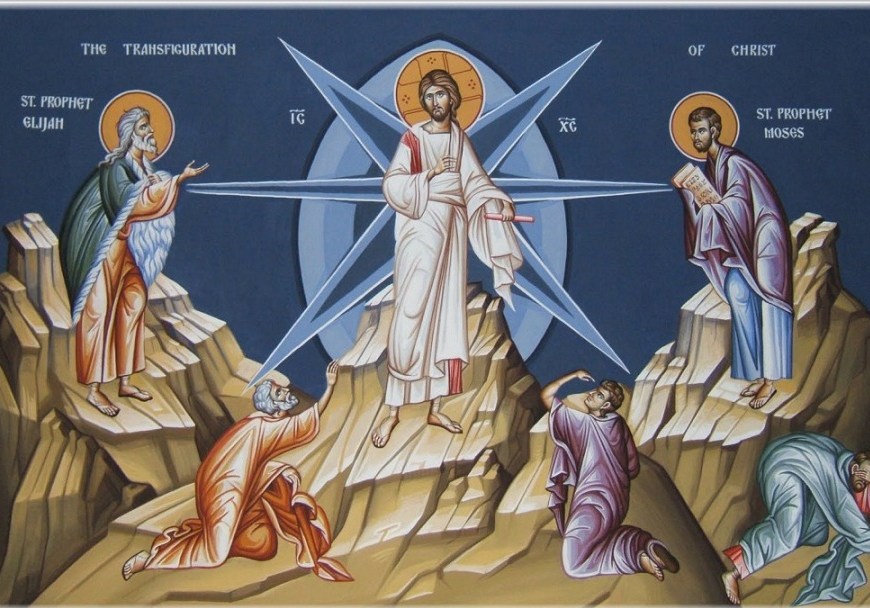
The Transfiguration and Being Known

One of the things I have become fascinated with over the last few years is the experience of Jesus. Hebrews 2:17-18 says:

For this reason [Jesus] had to be made like his brothers in every way, in order that he might become a merciful and faithful high priest in service to God, and that he might make atonement for the sins of the people. Because he himself suffered when he was tempted, he is able to help those who are being tempted.

I don’t think many Christians understand the full implications of this. Too many of us have this idea of Jesus as super-human. A Jesus who just knew everything – never had to figure anything out, never struggled with doubt, never had to work to forgive, never wondered what his purpose was – in other words a Jesus who doesn’t actually share in our struggles. Continue reading “The Transfiguration and Being Known”

The Sacrifice of Jesus and the Prodigal Son

So, a couple of days ago I laid out my argument as to why the idea that God demanded the blood sacrifice of his son for the forgiveness of sins is an error. (If you missed it, you should go read that post before continuing with this one: Did God Really Demand the Death of His Son for the Forgiveness of Sin?) Today I further elaborate my explanation/argument for a better understanding of what happened and why.

The writings of the New Testament draw a very clear line from the animal sacrifices used to atone for sins practiced by the Jews and the death of Jesus on the cross. For example, Ephesians 1:7 says that we have “redemption by his blood”. Revelation 7:11 says of the saints “they have washed their robes and made them white in the blood of the Lamb.” However, in a rather complicated passage from Hebrews explaining why the death of Jesus was more perfect and more complete than the sacrifices which were offered by the priests in the temple for the forgiveness of sins, Paul refers back to Psalm 40 which makes the reality of sacrifice clear: “Sacrifice and offering you do not want; but ears open to obedience you gave me. Holocausts and sin-offerings you do not require; so I said, ‘Here I am . . . To do your will is my delight.’” And at the risk of offending my Catholic friends who hold the doctrine of transubstantiation*, Jesus further distances the will of God from the desire for blood by declaring that the wine and bread of the Passover and communion meals were metaphorically his blood and body. Since none of the disciples commented on the strange, metallic taste of the drink he gave them or the sweet, porky taste of the bread, I think we can assume that the wine and bread remained wine and bread and the need for actual blood is done. Again, the need for the human ritual portion of the relationship between God and man was complete and the God-given portion now emerges cleaner and clearer than before. Continue reading “The Sacrifice of Jesus and the Prodigal Son”

Did God Really Demand the Death of His Son as a Sacrifice for Sin?

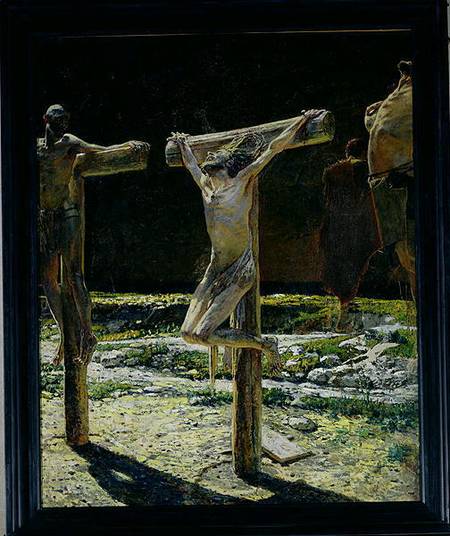
One of the more poignant arguments against Christianity is that the Christian God demanded that his son be offered up as a human blood sacrifice in order for justice to be satisfied and forgiveness offered. In this view the Christian God is an angry, blood thirsty tyrant who must be sated before he becomes a loving father. Christians will of course argue that people who view the crucifixion this way are missing the point, don’t understand God’s righteous anger, are minimizing the need for justice, etc. However, I think that the real truth is that many Christians misunderstand the reasons for the crucifixion and our critics are simply making some pretty obvious observations about our own teachings regarding the propitiation of sins and the death of Jesus. I know that I’m treading on some pretty hallowed theological ground here, but if you’ll stick with me, I think you may find that my upside down world understanding of this issue is a better fit with reality than what many of us have been taught.

Let’s start our discussion with the issue of blood sacrifice itself. The first thing to be noted is that blood sacrifice is not something which originated with the Hebrew God. It had been practiced for millennia prior and has occurred all over the world. It is a human invention. In his excellent book Ideas That Changed the World, Felipe Fernandez-Armesto offers the anthropological explanation for the pervasiveness of the practice of blood or animal sacrifice: Continue reading “Did God Really Demand the Death of His Son as a Sacrifice for Sin?”