The Quiet Secret to Global Revolution

Well, look at me! Posting for the second day in a row. I told you I’d be back! 🙂 I actually have a guest post up at Dr. Chuck Crisco’s site that I wanted to invite y’all to go check out. It’s on a topic near and dear to my heart – overcoming the “us vs them” dualism of the past in order to embrace … Continue reading The Quiet Secret to Global Revolution

This Is Our Faith

My friend Carol sent me a link to this video over the weekend of Egyptian Christian’s responding to the murder of 21 of their own by ISIS last month. I wish that everyone would see this video, because this is what the Christian faith looks like. This is the faith of the apostles, the saints and the many unknown faithful through the ages, as taught … Continue reading This Is Our Faith

Sticky post

Why Have Lunatics Taken Over?

Sometimes people come to me and say, “Rebecca, you are amazing, wise, funny and smell like flowers and lemon Pledge. Why are you not recognized as the wonder you are by all of humanity near and far?” To which I can only answer, “this is a great mystery to me as well.” The other questions I get asked a lot are: “has everyone lost their … Continue reading Why Have Lunatics Taken Over?

Sticky post

Free Will and Its Discontents

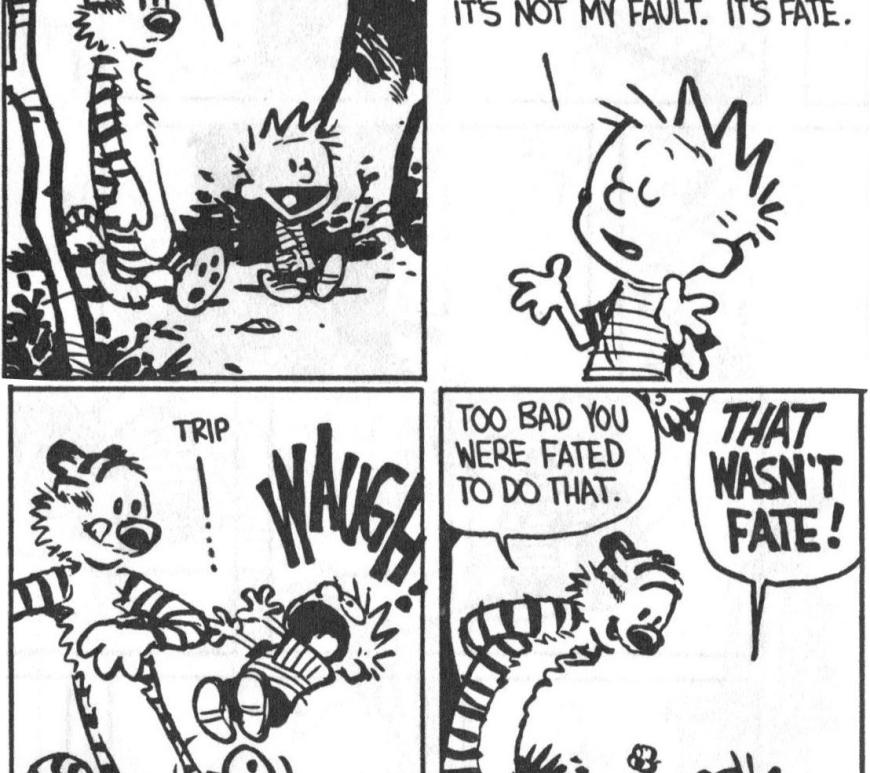
OK, so let’s talk about free will. I’ve had several people ask me to explain my understanding of it lately, so apparently it’s a subject of interest. As the conversation usually breaks out, you have free will on one side and determinism on the other. Free will says we make our own choices. Determinism says that everything is decided for us. Free will is a … Continue reading Free Will and Its Discontents

Enough Bigotry to Go Around?

Hey y’all! I just finished my fancy pants appearance on Moody Radio’s Up For Debate. (That I told you about yesterday which you would know if you had been paying attention. See the things you miss when you’re not paying attention?) Anyways, I will get the link to the show up just as soon as it’s available. Almost immediately after the show was done, I … Continue reading Enough Bigotry to Go Around?

Oppression, Starvation and Christ

The hallmark of an oppressive system is that it benefits some people while harming others. Because the system does provide benefits to some people, many believe that the system is fundamentally good. The fact that the system harms some people is attributed not to the oppressive nature of the system, but to the failures of the people who are being harmed. This has the effect of shoring up support for the system, even among those who are harmed by it because to admit that you are suffering is to admit your own unworthiness. Any evidence of harm being done by the system becomes evidence that the system is required to protect what is good about the system from those who are unworthy.

Those who are unable to hide the extent to which they are suffering are unlikely to stand up for themselves, because as members of the human race, they inevitably will have faults and failures. Sometimes they themselves believe the narrative which says they are to blame for their own suffering. Other times they are resigned to suffering in silence, knowing that however unjust it may be, their faults and failures will be used to condemn them and dismiss their complaints against the system.

We see a prototypical example of this sort of oppressive system at work in the book of Job. Job’s friends believe that suffering is caused by sin, that this is as it should be, and that Job’s suffering must therefore be the result of some secret sin on Job’s part. In the story of Job, we see that this is not the case. Job was specifically identified as a good man and God himself rebuked Job’s friends for suggesting otherwise. However, rather than understanding God to be rejecting the oppressive habit of blaming suffering on sin, we tend to read this as the story of a man who was an exception to the rule that you get what you deserve in life. A caution against relying on the system to excess rather than a denunciation of the system entirely.

At the other end, oppressive systems claim that those at the top are owed a larger portion of the benefits from the system because they are simultaneously very good and very bad. They are very good in that they are smarter, more ambitious, more fierce, closer to the divine and capable of wielding more power than the rest. They are very bad because if they are not amply rewarded, they will not use those abilities for the good of others. Their demands are allowed to grow, unbounded by anything outside of themselves as the people who support the system trust them to provide for their wellbeing, provided their demands are adequately satisfied.

An oppressive system always relies on an idol at the very top in order to operate. The idol allows the men who benefit from the oppressive system to lay claim to their right to power as the result of being the living embodiment of the idol. An idol may be a god or spirit, such as the ancient pagan gods or anthropomorphic spirits of the earth even ancestor worship. Or it may be an idea about the proper ordering of humanity such as in monarchies, gender roles or caste systems. Or the idol may be a virtue which is elevated above all others such as intelligence, ambition or strength.

Idols, of course, are by definition false gods, unworthy of worship and unable to provide what they promise. The systems which grow out of them are inevitably oppressive, providing benefits to some while leaving others to suffer. Frequently this suffering is incurred in service to the system itself such as those who sacrifice their children to idols or who work themselves into an early grave providing for families they barely know.

While many today view Jesus as either harmless or an advocate for the system de jour, in reality, Jesus subverts every oppressive system. He demonstrates that only God is worthy of the devotion we humans habitually give to idols. Unlike the idol, which is functionally viewed as simultaneously very good and very bad, Jesus shows us the face of a God who is good in all his ways. He does not provide for us according to our fealty, but causes the rain to fall and the sun to shine on all the same. Rather than demanding disproportionate benefits in recognition of his worth and power, God demonstrates his worth and power by giving up all benefits and sharing in the lowest human’s suffering. Continue reading “Oppression, Starvation and Christ”

Of Camels and Gnats

Gnats are annoying. Biting gnats leave welts that are much itchier than mosquito bites and when they swarm, you’re likely to wind up looking like an idiot flailing your arms around in a futile attempt to keep them away. Not to mention that you’ll inevitably end up inhaling or swallowing one on accident. For the next hour you’ll feel like there’s something disgusting stuck in your throat or nasal passages. As small as they are, gnats aren’t the sorts of things you live peaceably with.

So you can imagine that back in the days when camels were a normal mode of transportation, if you hired a camel to carry you and your goods on a long trip, and your guide showed up with a gnat infested camel, this would be an issue. A long trip on a gnat infested camel was probably a known cause of nervous breakdowns in the ancient world. So, of course, you would demand that the guide you hired for the trip do something about the problem. Attach fly paper to the camel’s ears and provide you with a climate controlled helmet to wear on the trip or something.

Now, a camel has a thicker hide than a human. But a serious gnat infestation isn’t fun for a camel to endure. Particularly since the little devils will target soft spots like the nose, eyes, mouth and other more unmentionable areas on a camel. Camels aren’t particularly know for their sweet dispositions anyways. So it’s easy to imagine that a gnat infested camel may be a particularly ill tempered beast.

In fact, while you are busy figuring out what to do about the gnats. the people tending to and attempting to load and prepare the camel are liable to get bit, spit on, kicked in the head, crapped on and otherwise injured by the camel. Imagine for a moment if you responded to the various cries and complaints of the people the camel is hurting by telling them to be more careful in doing their job, to stop with all the complaining. Maybe you fire the person who had the gall to come to work covered in camel dung.

Or maybe you’re not quite that insensitive so you say, “once we get this gnat situation worked out, the camel will settle down and you’ll be fine. But right now I need you to shut up so I can deal with this gnat problem.”

Or if you fancy yourself as a sensitive person who understands the plight of dealing with a gnat infested camel, you might say, “the camel kicked you in the head? That’s awful. I know what it’s like. You should see the bites I got while I was sitting on it. I feel your pain. In fact, you really ought to be over here tending to my welts instead of laying on the ground moaning like that.”

It seems to me that as a people, this is exactly how the problems we face play out. We are so fixated on the problems of those who are riding the camel that we end up not tending to the injuries inflicted on less powerful people who have been injured by the camel. Continue reading “Of Camels and Gnats”

I See Rich People. They Talk to Me. . .

The mouse on my computer broke. So now I’m back to writing on my kindle. Which is a marvelous bit of technology, but it has all sorts of quirks which can easily double the time it takes for me to do a post. And the spacebar for the keyboard is gimpy. But since I don’t even have money to replace the mouse, I’ll just have to limp along the best I can.

I’ve been thinking a lot lately that when I finally break free of all these obstacles, I’ll astound everyone. It’s like I’ve been trying to play the game wearing weights. If I could just get free and have a fully functioning computer, a good internet connection and a few hours a day without children, well, you just won’t believe what I can do.

As I was contemplating the rather unpleasant task of writing on my kindle (something I did exclusively for at least six months), it occurred to me that this is why we hear so much more from rich people than anyone else. If you’re rich, you can grab a few hours which you would otherwise have spent playing Sugar Crush and write something thoughtful on your nice computer without any real delays or impediments. Or maybe you’re more of a take my Macbook to Starbucks to write sort of writer.

But when you’re not rich, you have to type out the word six because the six key doesn’t work any more. And putting in a hyperlink requires the sort of planning skills normally reserved for major military operations. It’s like driving one of those cars that you have to roll down the window to open the door. Everything’s just much more work when you don’t have access to resources.

And having crappy, unreliable technology is a first world problem. Imagine what it took for those women in Nigeria to get the world’s attention when their girls were taken! It’s really no mystery as to why people who are powerful and influential are usually white American men. It’s not that every white American man has resources. It’s just that nearly everyone who has resources is a white American man. Having resources removes so many obstacles that what is impossible for other people is possible for them. And that is a big part of our problem.

Having resources doesn’t necessarily make the path to sucess a clear and easy one. You still have to work harder and be smarter and overcome more than everyone else in order to acheive great things. I mean, Paris Hilton’s family says she works very hard and I believe them. It wouldn’t surprise me at all if she puts in sixty hour work weeks. The thing is that my husband has put in sixty hour work weeks pretty routinely for nearly 20 years. And we can’t even afford to buy a mouse.

(The first person to ask why I don’t get a job wins the chance to find me a job with hours that work for our family, arrange the care of our kids by someone who is able to provide high caliber, on demand tutoring, counseling, and training in the ways of the world customized to each child’s needs, obtain transportation, clothing, housekeeping, cooking and taxi services to make that all happen. Good luck. Let me know when you get that all worked out.)

Aside from being bullshit, the connection between who has the existing resources and who gets seen and heard and rewarded is more sinister than we realize. You know the proverbial “they” we always hear about? The ones who tell us what other people think of us and what’s normal and what’s a problem and what’s expected of us and what failure looks like? Sometimes people will joke and say, “who is this ‘they’ you keep talking about?” Well, the answer to that is simple. Continue reading “I See Rich People. They Talk to Me. . .”

Manhunt for Peace in the Dark Heart of Africa

You know my thing about Africa that I’ve mentioned a couple of times lately? Well, allow me to share a story out of the Congo and Uganda. Now, in Western minds, this part of Africa was long considered “the dark heart” of Africa. And unfortunately in the last few decades, there have been times when anyone who was paying attention would wonder if there wasn’t some sort of curse on that area.

The details of the back and forth that got and kept the conflict going are long and boring. But the basic outline of what happened is this:

A political uprising originally brought on, in 1986 and 1987, by genuine oppression (and thus serving objectives justified in the eyes of those who took up arms), so quickly mutated—by the end of the 1980s already—into a practice of radical violence, with no other aim, at the end, than its own perpetuation, beyond even the effective survival of the group.

(This quote and all others used from the excellent story Sign Warfare, by journalist Jonathan Little, Asymptote Journal, April 2014)

The way the conflict was fought was the sort of stuff you don’t say out loud when the kids are around and only in whispers in private. You don’t want it in their head that such things could exist. You wish it wasn’t in yours. So this conflict is the stuff of nightmares here. This is the conflict that gave us Kony 2012 and boy soldiers, the lost boys that some churches took in.

Today, the government, which triggered the original conflict by refusing to allow freedom for an oppressed, mistreated minority, is engaged in a manhunt to find the last 150 or so soldiers still fighting. 150. That’s it. They can’t just ignore them because they are so violent. 150 is so few, but they still have the power to kill thousands. And I’ll tell you what? If you ever have to make a bet on a face-off between a Navy Seal and one of the Congolese soldiers involved in hunting them down, I wouldn’t be too quick to write off the Congolese soldier. I’m just saying. They’re kind of bad asses.

But anyways, this isn’t your typical manhunt. What they really want is for the soldiers to desert and surrender:

[The combatants] who surrender are well-treated, they are interrogated but without violence, it isn’t necessary, once out of the bush they have nothing to hide; then they’re sent back to Uganda, where they’re granted amnesty, go through a program of psycho-social reinsertion and sometimes get some professional training, before being sent back home with a little money and a few household supplies, or joining the army, more or less voluntarily. 

The biggest reason for the ongoing conflict at this point is that the combatants don’t trust the government. They think offers of help are a trick. Because it’s been that kind of war. But this time, it’s real.

That is amazing. This is not how human beings deal with their enemies. Especially enemies who are driven by a logic no higher thanwe just kill for the sake of killing. It humiliates the government, that’s good enough for us.” Those are the enemies you kill. The ones that you and your people and generations to follow never forgive. The people who, at the very least, must be held accountable for their crimes. 

What is going on in the Congo has never been done before. We’ve never ended our conflicts by forgiving and helping our enemy get well. Never. I am not saying that the government is now perfect or that this particular policy is the be all and end all. But this is something amazing which uses the logic of God’s Kingdom to defeat the power of the enemy’s kingdom. Continue reading “Manhunt for Peace in the Dark Heart of Africa”

A Random Hump Night Thought

I mean hump night because today is Wednesday which is halfway through the week, thus earning it the name “hump day” because it’s all downhill once you get over the hump. Just in case you were thinking about that thing your dog does to visitors. At any rate, I just wanted to share a random thought with y’all. Don’t worry, my random thoughts are more … Continue reading A Random Hump Night Thought