God’s Ways Have a Power All Their Own

God’s ways do not rely on the goodness of men (or women) to work. They have a power all their own. Thus, all through the Old Testament, we see God relying, not on good men, but on people who were prone to abuse, violence, weakness, arrogance and all manner of human sin to enact his plans. To put a finer point on it, any idea … Continue reading God’s Ways Have a Power All Their Own

The Spirit In You Knows the Truth

That hopeful feeling you experience when someone tells you that God is better than you’ve been taught is the Holy Spirit moving. I know a lot of churches tell you to ignore it. To settle for a God who isn’t really good enough. But listen when your heart leaps with hope, joy or peace. That’s the Spirit in you. Continue reading The Spirit In You Knows the Truth

The Mystery of Faith

I always wondered about faith.  Evangelicals say that you have to choose to have it.  Calvinists say that you are predestined to either have it or not.  It’s a free gift that you cannot earn.  But you have to nurture and hang onto it.  Catholics and Orthodox Christians practice it with rituals.  So many contradictory ideas. What I have learned is that faith is the … Continue reading The Mystery of Faith

What’s the Deal With Prophecy?

In the bible, a prophet doesn’t predict the far-off future. Instead, their gift is an ability to see and explain the reality of what they see happening all around them. These are the people who have heard the voices of those who are being silenced. They see through the agreed upon lies and narratives for why things are the way they are. They are able … Continue reading What’s the Deal With Prophecy?

I Probably Shouldn’t Say This . . .

OK, I just want to say at the outset that what I am about to say is not in anyway meant to insult Jesus. I would swear it to you, but Jesus says not to swear on anything. But you should know that that’s how much I mean it when I say that I’m not insulting Jesus. So don’t go taking this all the wrong … Continue reading I Probably Shouldn’t Say This . . .

Salvation – It’s Not What You’ve Been Taught VIDEO

Is salvation really about avoiding hell when you die? Yes, that’s the popular teaching we’ve all heard, but in this video I explain why this is a misunderstanding and what the truth of salvation actually is. (Hint – it’s better than you’ve been told!) Enjoy! Here’s the link for those of you reading via email. See – I do catch on eventually! 😉 Continue reading Salvation – It’s Not What You’ve Been Taught VIDEO

Does Forgiving Demand Restoring Relationship?

Over the years I’ve forgiven some rather unforgivable things. I hope you have as well. . . Wait – that didn’t come out right. Hopefully you’re one of those rare birds who have never had anything particularly unforgivable happen to you. But if you have had someone do something unforgivable, I hope that you have been able to forgive them.*

One of the problems that people commonly struggle with when it comes to forgiveness is the issue of the restoration of relationships. Can you really say you’ve forgiven someone if you are unwilling to be in relationship with them? Does forgiveness demand that your relationship be restored? Or can you forgive but refuse to engage in relationship with the person who wronged you?

Part of why I am such a big fan of forgiveness is that it’s a very empowering act. I cannot often control the way other people behave towards me, but I can control how I respond to it. Forgiving allows me to take back my power from someone who has injected pain, suffering and turmoil into my life against my will. I get to declare in the heavenlies when a person is bound or loosed from their sins. And forgiveness also props opens the door to healing from harm done.

On the other hand, insisting that forgiveness must be accompanied by restoration of a relationship is just the opposite; it’s dis-empowering. It doesn’t allow for choice. It doesn’t allow for self-love or self-protection. It makes my own pain and struggle and needs completely irrelevant. And all too often, this insistence that forgiveness must go hand in hand with restoration of relationship is a tool of control which gets used against people who are already in a weak position.

Being in relationship with other people always opens us up to being hurt. And if we refuse relationship with anyone who is dysfunctional or hurtful, we will be lonely indeed. Most acts of forgiveness should not be accompanied by a reconsideration of the relationship as a whole. Generally, we ought to forgive and move on freely. But there are those times when what is being forgiven does call the entire relationship into question. So how can we maintain our default openness for relationship while also being realistic about which relationships are simply too dangerous, unhealthy or dysfunctional to continue? Continue reading “Does Forgiving Demand Restoring Relationship?”

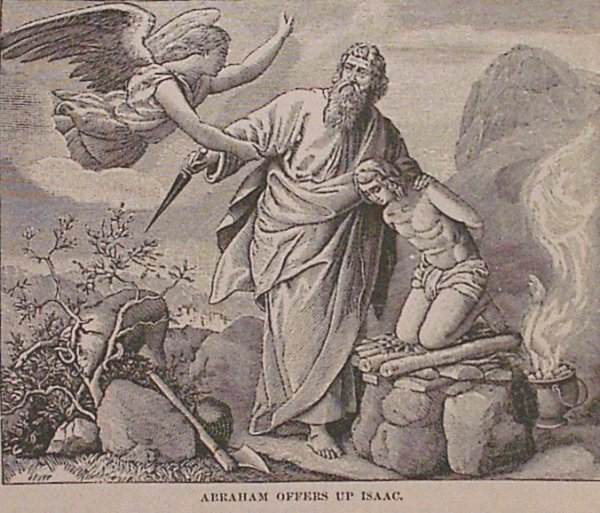
The Sacrifice of Isaac . . . Or Provincial Much?*

Shall I offer my firstborn for my transgression, the fruit of my body for the sin of my soul? He has showed you, O man, what is good. And what does the LORD require of you? To act justly and to love mercy and to walk humbly with your God. ~ Micah 6:7-8

In the pantheon of weird stories in the bible, the Sacrifice (or Binding) of Abraham is often treated as the most inexplicable or as the clearest evidence of how capricious the God of the Old Testament is. However, it seems to me that these conclusions simply demonstrate our poor understanding of history, God’s ways and human nature.  In context and with a decent concept of human nature as well as a proper understanding of what God is about, the story and it’s moral aren’t so hard to understand.

The reality is that infanticide has always been part of human behavior. It’s been practiced everywhere and through all time periods. Including during the time of Abraham. In fact, there is evidence from both ancient writings and from archaeology of wide-spread infanticide and ritual child sacrifice in the Ancient Near East continuing into Greco-Roman times. Continue reading “The Sacrifice of Isaac . . . Or Provincial Much?*”

Being Passive is a Discipline

Passivity is a discipline. In fact, sometimes I think it is the hardest discipline – particularly in a culture like ours. We humans like to DO things. We like to build. We like to invent. We like to build relationships and parse them out when they breakdown. We like to plant and grow and make. We like to talk and write and sing. We like to be masters of our fate, captains of our ships, directors of our plays. We seek, we strive, we fight, we climb mountains simply because they are there. We admire those who do it well and follow those who champion the cause of doing. Which is good and well. It is as it should be in most ways. And yet . . .

Here in the great Northern Tundra of the Upper Midwestern United States, there will be a reduced apple harvest this year, although fortunately it’s not as bad as some had feared. You see, as in much of the country, winter was mild and warm weather showed up early. The apple trees woke early from their winter doze and sent out their blossoms into the warmth. However, March and April had merely traded places. The warmth of March that tricked the trees into releasing their blossoms too soon gave way to frosts of April that threatened the delicate apple blossoms before they had time to set fruit. So now, this fall when the trees produce the fruit of a long summer of growing in warmth and rain, their harvest will be inferior. All because the trees were tricked into think their passive winter wait was over and their time to shine and begin the work of making fruit was at hand. But the conditions that made them think their time had come were not sustainable.

We humans are not trees. We don’t have to be tricked into acting outside of our proper time. But it requires great discipline to refrain from action when conditions seem ripe even when we know it’s not sustainable. We tell ourselves we’ll work it out later. But this is a lesson to learn. To be passive. To wait. And most of all to allow God time enough to work in us and on us. Continue reading “Being Passive is a Discipline”