Reforming Christianity

churchWriter and lecturer Phyllis Tickle has pointed out that the church undergoes a major shift every 500 years. The Protestant Reformation happened about 500 years ago, so we’re due. And I think anyone who pays attention would agree that it’s time for a major change. We’re too fractious. The world and our understanding of it has changed in really radical ways. The church really hasn’t adjusted well and it’s created an unsustainable gap between the world we live in and the church.

I’m hardly the first one to say this, but the state of the church is pretty similar to the state of Judaism during the time of Jesus. There were differing factions. Some wanted to accommodate or at least cooperate the Roman ruled world they lived in. Some wanted to fight it tooth and nail. Others just wanted to withdraw from the battles and set up their own pockets of faithful living. There were factions among the Pharisees who fixated on following the rules just so in order to curry God’s favor as a way to bring about change. Many were looking for the arrival of a Messiah who would just wipe the whole mess away and set things right. Over all of it were the various power structures of the religious establishment who argued among themselves while remaining largely oblivious to the needs of the people under them. Just like today, they weren’t all bad or wrong, but over all, it wasn’t working. And a real solution to the problems faced by the Jewish people seemed almost unimaginable. Continue reading “Reforming Christianity”

Women, Church and God’s Kingdom

A few years ago my family needed a new church. So we were looking a couple of non-denominational churches in our town. The problem was that I quickly learned that none of them allowed women in leadership positions. But, as my husband pointed out, it’s not like I was looking to be made pastor. And we aren’t going to agree on everything. So I figured we could give them a shot. The problem became that at each of them I had the same experience. As I was sitting in service, something in me kept saying, “get up. Leave. Walk out.” Finally, it was more like a scream and I couldn’t ignore it anymore. So I walked out and didn’t return to any of them.

When I did that, a wave of utter peace came over me. I realized that it had been the Spirit in me which was telling me to leave. And I knew that never again would I be able to look at the teaching of the unique submission* of women as something we can agree to disagree on. Like Jesus said, anyone who, having put their hand to the plow turns and looks back is not worthy of the Kingdom of God. God had already lead me out of humanity’s old ideas about women and trying to ignore that to sit under churches which were perpetuating what I had been lead out of was like looking back.

The reason the issue of women in leadership, the church and family is such a flash point is because it gets to the heart of the challenge of what it means for the Kingdom of God to be made manifest among us. It’s not just a matter of the interpretation of scripture or rules governing churches, but is a potent sign of how we understand God’s Kingdom ways. Are they improved versions of our ways? Or is God calling us to utterly abandon our ways in favor of an entirely new Kingdom’s set of rules? What we’re seeing here is actually a spiritual battle between the stronghold of of the enemy’s ways which have reigned for so long and the coming Kingdom of God. (Yes, I know it’s not nice or charitable to say that fellow Christians are actually fighting for Satan on this issue. But as you will see below, I do believe it’s well justified. And I don’t mean to say that they are evil. We’re all just learning to grow up, after all.) Continue reading “Women, Church and God’s Kingdom”

What’s So Great About a Bible Hero?

Did you know that research has found that people in interracial marriages report that marriage is more difficult than they anticipated and are slightly more likely to divorce? As someone in an interracial marriage, I can tell you why that is. Our normals are different. And that causes problems.

By normals, what I mean is what we each assume is right, good and normal. All couples deal with this. You think it’s normal to walk around the house in your undies and your beloved wouldn’t dream of walking out of the bedroom with out his shoes on. He thinks spaghetti is served with velveeta melted on top and you’re not a lunatic, so you recognize crazy when you see it.

Most of the time we are able to adjust, compromise and accept that each of us thinks the other person is certifiable in some way. But people who marry people from other races tend to face much deeper differences in what they think of as normal. African American’s relationship with authority is much different, more complicated and often more rigid than a white American’s. (Oddly enough, attitudes towards authority just don’t come up much while dating.) A woman I know married a man from Peru and was shocked to discover that he expected her not to speak with men she didn’t know when he wasn’t present. He was shocked that she would even consider doing such a thing. Another woman I know married a man from East Asia and learned that they had very different ideas about secrets – he felt perfectly comfortable telling their children lies about some important things to protect them from hard realities. Authority, gender, secrets – when people from different cultures get married, they often discover that they are in conflict about some very deep things.

What makes interracial relationships so difficult, I think, isn’t just the conflicts that come out of these differing ideas of what’s normal. It’s that you are constantly being forced to examine and question the underlying assumptions you have regarding really deep things. And we’re not good at that. We can barely admit when we’ve taken a wrong turn and gotten ourselves lost. Considering if maybe your entire concept of the role of fairness in relationships and society is off is painful and confusing. Add in the fact that there isn’t necessarily a “right” answer to questions you always used to know the right answer to and  . . . . arrrrgh!

Sometimes you just want to tell the other person to leave you alone – life was just fine before you came along with your crazy ideas and made me question the existential meaning of housekeeping! (And yes, I do know that in my case, some of this is driven by the fact that my husband and I are very intense people who completely over-think everything. But really, that just means we can define what we are arguing about in greater detail than most people!)

I happen to think that as hard as it is, couples in interracial relationships are doing hard, but good, important work. The sort of work the heroes of the bible did, in fact. Wait . . . what? Interracial couples challenging each other’s ideas about normal is just like the bible heroes? How’s that for a complete non sequitur! Allow I to explain. Continue reading “What’s So Great About a Bible Hero?”

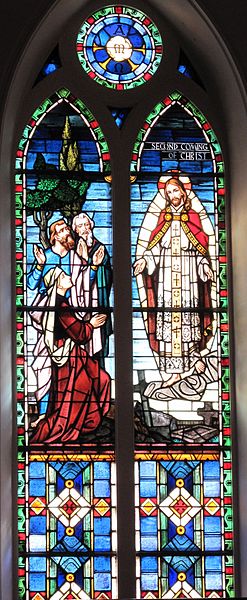
If Jesus Returned Today

If Jesus returned today would you be ready? Would you be ready to live in a world where God was your only source of life? Where you could no longer get life/identity from other people, your accomplishments, your money, your looks, your relationships, your roles, your job, your house, your clothing, your knowledge, your superiority to someone else or any other thing at all?

Would you really be ready to live in a world where your only reaction could be love? Where whatever happened or whatever another person did, you couldn’t be resentful, jealous, seek your own way, hold a grudge, assert your rights or demand immediate change?

Would you be prepared to have your every problem solved by God’s comfort? Are you really prepared to come to God with a complaint, a hurt or a problem and instead of having the situation set right, have God say, “all is well. I love you and care for you. Be at peace” without actually changing anything for us?

If Jesus came back today, would you be ready to live at peace with all people? Would you be able to love, value and take joy in those who think differently than you? Whose desires and work is different than your own? Could you find joy in someone sees and experiences God in ways that you do not? Could you humble yourself to learn from them instead of opposing them? Could you love them even when you got nothing in return?

Could you live with only what God has provided and not what you want? If beauty and the fruit of God’s creation were all that were available and no thing which took from rather than added to that existed, could you be satisfied? If there was a lot of fruit but little meat? Water in abundance, but no artificially colored and flavored drinks? If you could know and be in contact with all people and places, but rarely, if ever, travel anywhere?

Could you take correction with joy rather than pain? Could you face being told you are wrong and instead of arguing, defending yourself, feeling bad or condemned, be excited at the new truth you have been shown?

Are you able to make God your greatest desire and ambition? Instead of dreaming of awards or degrees or success or a beautiful family, could you spend your days and nights dreaming of ways to draw closer to the King? Could you make all of your choices according to what would amplify love, peace, hope, faith and goodness rather than what would amplify wealth, status, comfort, ease and reputation?

Could you seek relationships for how they will sharpen, grow and change you – iron against iron, deep calling to deep – rather than how they affirm you, how they bring you comfort or ease, how they build you up? Could you persevere through the process with gladness over how you are being refined without resenting what it costs? Could you refrain from doing anything that brings harm to another person – no matter how different or far removed from you – and no matter what suffering you will endure as a result? Continue reading “If Jesus Returned Today”

Consciousness and Genesis 1

I want to share my personal theory on the story of creation told in Genesis 1 today, but I of course first need to grab everyone’s attention with something interesting or clever so I figured I’d start with this joke:

A minister, a priest and a rabbi went for a hike one day. It was very hot.
They were sweating and exhausted when they came upon a small lake.
Since it was fairly secluded, they took off all their clothes and
jumped in the water.

Feeling refreshed, the trio decided to pick a few berries while enjoying
their “freedom.” As they were crossing an open area, who should come
along but a group of ladies from town. Unable to get to their clothes in
time, the minister and the priest covered their privates and the rabbi
covered his face while they ran for cover.

After the ladies had left and the men got their clothes back on, the
minister and the priest asked the rabbi why he covered his face rather
than his privates. The rabbi replied, “I don’t know about you, but in
MY congregation, it’s my face they would recognize.”

Of course that joke has nothing to do with creation, but it’s funny so in my infinite wisdom, I’ve decided that’s what counts. Now . . . moving on to the story of creation.

One of the oddities of the story of creation in Genesis 1 is that the order in which things were created makes no sense. First there’s day and night and then later, after there was land and plants, but before there were animals, the sun, moon and stars get made. Water was apparently pre-existing and had to be separated from air to make the sky. So on and so forth.

For creationists, none of this matters because somehow that’s just how God did it. For people who run a wee bit deeper and wider than that, both logic and science say that it couldn’t have happened like that. Those who reject religion say the creation story is just something people made up to explain the world and really means nothing. Christians who don’t blasphemously reject the evidence of God’s own creation in favor of man’s understanding of scripture figure the point of the story is that God made everything, he made it with purpose and it is good.

I personally have my own pet theory about why the order of creation is all jumbled up in Genesis 1. Continue reading “Consciousness and Genesis 1”

Raising Jesus and Original Sin

I have this theory about how it was that Jesus came to be born without sin and it is just that – a theory. But I thought I’d share it with y’all because it has real implications for those of us who are or will be parents. Traditionally, it has been taught that Jesus was born without sin because he was conceived without sex. Because somehow it seems, the act of sex by our parents mysteriously implants this dark stain of sin on us at conception. While there is a verse in Psalm 51 which can be read to confirm this view, I personally find the idea that my parents having sex to conceive me made me sinful unreasonable and unconvincing.

Sex is a good thing. God told Adam and Eve to be fruitful and multiply. Sex allows the two to become one – to reach past ourselves into another. It brings joy and satisfaction into our lives. It is the means by which we bring forth life and become co-creators with God. It can be misused, to be sure, but how could something which is fundamentally a good also be the thing which stains us before we even have true being? Not to mention that the mechanics of how something my parents did when I wasn’t even there made me bad are problematic.

I don’t think that Jesus’ lack of sin had its roots in the way he was conceived. Rather, my theory is that his lack of sin came about due to something far less mystical and more practical – from his parents. Mary and Joseph had been told prior to Jesus’ birth that this child would be the messiah. Which means that before he was even born, his parents understood that Jesus was good, holy and anointed. Don’t you suppose that this knowledge influenced the way that they parented?

Orthodox Christianity teaches that Jesus was both fully man and fully God. But most Christians tend to give short shrift to the idea that Jesus was fully man. Rather, they seem to think of him as just playing at being human. He resided in a human body, sure, but otherwise, he was God. Continue reading “Raising Jesus and Original Sin”

So What Happened to Adam and Eve Anyhow?

Let’s do a quick horticultural lesson here today on the difference between fruits and vegetables. Fruits, technically, are the fleshy, edible part of a plant which contain seeds. They are produced by plants that flower as a means of reproduction. Vegetables, on the other hand, are plants which are themselves used in part or whole as food. So, for example broccoli is a vegetable because we eat the stems and immature flower buds of the plant. Tomatoes are fruit because they contain the seeds of the plant they grown off of. Lettuce is a vegetable because we eat the leaves of the plant. Apples are fruit because they are the seed bearing part of the plant which grow after the pollination of the tree’s flowers. Get the idea?

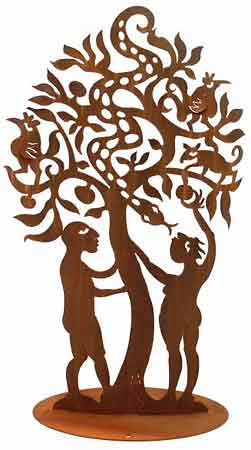
The reason I bring this up is because there’s a little detail which is often missed in the story of the fall which is actually, very, very important should we wish to understand what happened. You see, God forbid eating the fruit of the tree of the knowledge of good and evil. The fruit is what a plant produces – not the plant itself. Fruit is the end result of a process of blooming, pollination and growth. What God was forbidding wasn’t the knowledge of good and evil, but the end result of it – the fruit of that knowledge.

(Before going any further, if you haven’t already, you will need to read the previous posts on the fall or nothing I say below will make ANY sense. They are:

Why Was the Tree of the Knowledge of Good and Evil in the Garden?

The Fall Wasn’t Our Fault

Does God Sit Around Monitoring Our Thoughts? And Other Pertinent Questions

Don’t worry. They’re short, We can wait.)

You will perhaps recall that when speaking to the serpent, Eve said that God had also forbidden touching the tree of the knowledge of good and evil. We don’t know if she was mistaken and actually thought she wasn’t allowed to touch the tree or if she was exaggerating to make her point to the serpent. But either way, I think it’s fair to surmise that Adam and Eve were unfamiliar with the tree. Which means that when they ate of the fruit of the tree, they got the results of the knowledge of good and evil without having even started the process which normally leads up to the having fruit to eat.

The text says that Eve saw that the fruit was useful for gaining wisdom. Wisdom is when you use knowledge and understanding to guide your actions, thoughts and choices. Eating the fruit was useful for gaining wisdom – it gave the person who ate it the chance to live as one who knows good and evil – ie is able to put their knowledge into action. Only Adam and Eve had no knowledge. And without knowledge, the only way to learn wisdom is by screwing up and learning from it. The difference between how the fruit was meant to be used to gain wisdom and what happened to Adam and Eve is like the difference between dropping a newly minted navy seal off in the middle of the jungle with only a what he could fit into his pack to survive on and dropping a kidnapped child off in the jungle with a notebook, two pencils and a fruit roll-up in their Barbie backpack. Continue reading “So What Happened to Adam and Eve Anyhow?”

Does God Sit Around Monitoring Our Thoughts? And Other Pertinent Questions

Are there any limits on suffering? Does God sit around monitoring our thought? Does God know everything that’s going to happen before it happens? These are some big questions which I’m going to be tackling today. But first, if you haven’t already, you really do need to go read my last two posts so you won’t be totally confused:

Why Was The Tree of the Knowledge of Good and Evil in the Garden?

The Fall Wasn’t Our Fault

Don’t worry – they’re all short. This post will still be here when you get done.

‘Kay? All caught up? Alrighty, then. So, I’ve been talking about the story of the fall for the last couple of days. But for the moment, I want to rewind a bit and go back to Genesis 2. In that chapter, God brings the animals to Adam to be named. Words are powerful things – “In the beginning was the Word . . . Through him all things were made.” Naming has been seen in many cultures and in many times as an act with great mythological and symbolic power. And God gave the power to name and label the creatures of his own creation over to the man. This is the act of a God who is willing to allow for the unpredictable and in not threatened by what he doesn’t direct.

One of the grand arguments of Christianity is whether God knows exactly what is going to happen at all times or if events can be unexpected and unpredictable. I wrote yesterday and in another post on time that I think that there is a difference between God as he exists outside of time and God as he acts within the flow of material creation and time. Outside of time, all that is and will be and ever was exists together and God is complete, whole and unchanging. Within the material world where time exists, God is in dynamic relationship with his creation which does act and unfold in unexpected and unpredictable ways. In fact, I believe that God enjoys this aspect of creation. I think it gives creation an almost game-like quality and allows for true relationship. When God handed the naming of the animals over to Adam, God lost nothing. God does not have our dysfunctional need for control and predictability. He is sovereign all on his own to the point of being able to hand the naming of the animals off to humanity.

I bring all of that up because one of the questions raised about what I’ve been sharing regarding the story of the fall is whether God knew it was going to happen. It was made very clear to me that the answer is no. Not only was it not part of his plan, it was not something which had been anticipated. As I explained yesterday, the accuser had a role to play in God’s kingdom but it in no way required inviting children into an adult game. Continue reading “Does God Sit Around Monitoring Our Thoughts? And Other Pertinent Questions”

The Fall Wasn’t Our Fault

So yesterday, we left young Adam and Eve standing next to the tree of the knowledge of good and evil. As I explained, I was told/shown that the tree was to Adam and Eve what the adult world is to a child. Rather than being a temptation or even a danger, it was a good thing which let them know that there is more to life than their childish existence. God told them not to eat from that tree because the experiences of the adult world are not for children to have – adult experiences being the fruit they were not to eat. Under normal circumstances, the existence and close proximity of the adult world does not pose a threat to children, nor is it particularly tempting. Unless one of the adults does something to bring a child into the adult world inappropriately. Enter the serpent.

It has often been pointed out that the serpent isn’t specifically identified with the character of Satan in this story. However, the serpent was indeed Satan (whatever or whomever Satan is in reality). The connection between the serpent and Satan is made in several places in scripture – particularly in Revelation 12 and Revelation 22. But even more damning is that both the serpent and the character of Satan work in the same way. Satan is a Hebrew word meaning accuser or adversary. In Revelation 12:11, the serpent is described as “the accuser of our brothers and sisters, who accuses them before our God day and night”.

Satan’s job is to serve as an adversary. He does this through accusations. Which is to say that Satan calls the goodness of God, creation and humanity into question by offering alternative explanations for what is going on. So at the opening of the book of Job, we get the accusation that Job isn’t faithful because he loves God, but because God has protected him. When Job remains faithful after losing everything, Satan claims it is only because Job has not suffered physical harm himself. This is what Satan does – looks for any explanation possible to explain away what is good, true, faithful and loving. When Satan tempts Jesus at the end of his 40 days in the wilderness, he uses scriptures to argue that things which are forbidden – grasping power, testing God, etc – are in fact scripturally sanctioned. He offers an alternative vision of reality which Jesus rejects.

The thing is that Satan had a legitimate role in God’s kingdom. One of the ways to view the existence of the material world is that it is God exploring and expressing the reality of himself through this physical creation. I’m probably going to flub this explanation, but outside of the created world, God exists as whole, complete and unchanging. Within the created world, God can unpack all of that and share himself with us, his creation. One of the ways which we can know and understand something is by seeing how it is and isn’t like something else. God is light – in him there is no darkness. But without darkness, how can the light be known? If there is only undifferentiated light, nothing can be seen or observed. And this is the purpose which Satan serves. He introduces the dark by which the light can become known. Continue reading “The Fall Wasn’t Our Fault”

Why Was the Tree of the Knowledge of Good and Evil in the Garden?

Hi, I’m Rebecca and I’d just like to say at the outset that to the best of my knowledge I’m not actually crazy. And no drugs were involved in the making of this post. Of course, the only reason for someone to start by declaring themselves sane and not drug addled is because they are about to say something which will make people think otherwise. Which is what I’m about to do.

But first, a little background. Perhaps you recall me saying a few times that I have a bit of a fixation on the creation stories. I rejected a literal reading of them ages ago. A supposedly literal reading is incompatible both with the evidence from God’s creation and the text itself. I don’t honestly know if the stories are a figurative retelling of things that actually happened. Or if they are true myths in the sense that they are not true because they actually happened, but true because they happen all of the time. Probably as far as I would go is to say that they tell the story of a deep spiritual reality which has been made manifest in the material world.

I think that the creation stories are important because they are our faith’s explanation for the start of all things concerning us. They give us a peek at our true identity, who we were made to be, what our relationship with creation is, how God works and ultimately, hold the key to figuring out what is wrong with us. That last bit seems particularly important to me, as it is very hard to fix something if you don’t know what is wrong with it.

Over the last 20 years I have spent what probably amounts to an absurd amount of time meditating on and trying to puzzle out the creation stories. There are two things I have learned which are particularly relevant to our discussion here today. The first is that the garden was a place for Adam and Eve live and learn. It was almost like a playground for them in the sense that for a child, the whole world is a playground. Like a playground, the primary purpose of the garden was for Adam and Eve to have fun, but also to develop skills. And like a playground, it probably wasn’t entirely safe, but life with no risk isn’t really the sort of setting which mankind tends to thrive in. Too much is bad, of course, but too little is stunting.

The other thing I have learned is that Adam and Eve were children. Remember the other day when I explained that adam actually means mankind and that when God made and dealt with Adam, he was dealing with mankind? Well, just like each individual person is born needing time to grow up into maturity, mankind is likewise in the process of growing up. There has been a tendency to assume that Adam and Eve were just like us, only without sin. However, Adam and Eve were just like us the same way that 3 year old me was just like me today. I’m still me, and I may or may not have actually improved since them. But inevitably I’ve grown and changed a good deal between 3 and 39. Continue reading “Why Was the Tree of the Knowledge of Good and Evil in the Garden?”