Exegesis and Why Noah Isn’t a Jewish Hero

So . . . heard any good exegesis lately? What’s an exegesis, you ask? (Or maybe you don’t ask. Too bad. I’m going to tell you anyways.) Exegesis is simply the practice of explaining a section of text from the bible. So, a lot of sermons include exegesis because they start with the text and then offer an explanation as to their meaning.

A good exegesis is a thing to make the heart sing. My favorite are the ones that show you something in the text you never noticed or understood before. Typically these explanations draw on what the preacher knows about the history, the cultures involved, the language and nuances which aren’t clear in translation, other Christian’s interpretations, the text’s relationship with other texts. It should also be spiritually astute. And it should always be humble enough to offer a possible way to read the text, not the only possible way. That’s not asking much, now is it?

I’m not sure that the wider public really appreciates what it takes to teach (or explain or exegete) scripture well. But even a two bit preacher with no education and terrible theology has devoted more time to studying scripture than the average person has ever devoted to any idea in their life. Obviously, this is no barrier to preaching some really stupid, dull and idiotic stuff from the pulpit. But we’re all merely human. We’ll have to trust that God can get it all sorted out eventually.

One of the things I’m going to start doing is passing along clips of really good exegesis that I come across. Because I’m going to go out on a limb and guess that you’ll like them as much as I do. Because we’re geeky like that. No, actually because they’re really good. And if you have to be geeky to see that, so be it.

Anyhow, I’ll just start with the insight of Rabbi Shmuley Boteach on the role, character of and errors of Noah in the bible (it’s not your typical exegesis, I suppose. But close enough):

the principal distinction between Noah on one hand and Moses and Abraham on the other is that Noah accepts God’s judgement. . .

Noah is not a hero in Jewish lore. Continue reading “Exegesis and Why Noah Isn’t a Jewish Hero”

Job’s Wife

Well, it happened again. OK, it actually happens nearly every time someone decides to write about the book of Job. Inevitably they take a swipe at Job’s wife for telling Job to “curse God and die”. She’s unfaithful. She’s unhelpful. She’s a tool of the devil, tempting Job to blaspheme. Bad, bad Job’s wife. Actually, not bad, bad Job’s wife. Bad, bad us. Seriously. All … Continue reading Job’s Wife

Your Goodness Isn’t Filthy Rags

If there’s one word which describes my experience of 2014 so far, it’s “inadequate”. I have felt utterly inadequate to the challenges of my life. Whatever good I can and have done has been wholly inadequate. In fact, this feeling has been so strong that I have frequently found myself battling a sense that anything I do or try to do is pointless. And into … Continue reading Your Goodness Isn’t Filthy Rags

Sticky post

Who’s In Charge Around Here Anyhow?

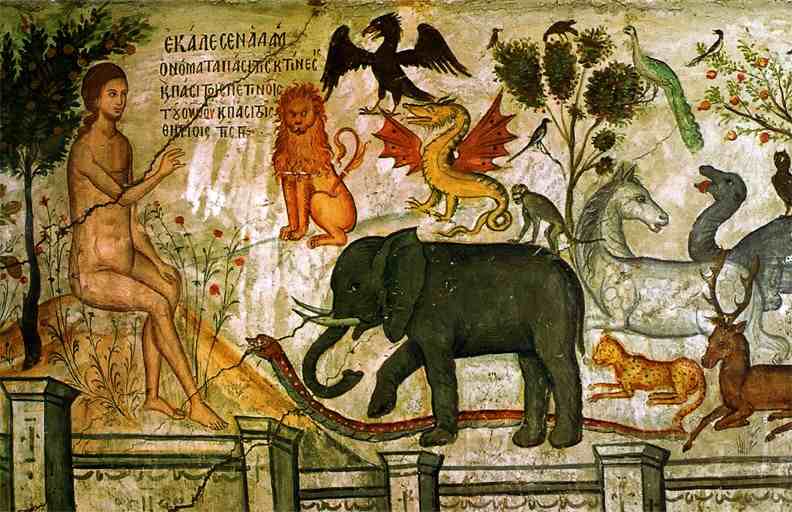
If you’ve been reading my blog for a while, you are well aware that I have a bit of an obsession with the creation stories in Genesis. (No, I don’t read them literally – I take them waaaaaaaaaay too seriously to inflict that sort of nonsense on the text which all but screams “this is a mythological telling, not a history lesson!”) If you could … Continue reading Who’s In Charge Around Here Anyhow?

John the Baptist Says to Stop Being an Arse

Some of you will recall that I was raised Catholic. So each week at mass I would listen to a reading from the Old Testament, the New Testament and the Gospels. And at the end of each the person reading would intone, “The Word of the Lord” and we’d respond together in monotone: “Thanks be to God.” Because we were so excited.

Now, I understand the intent of this little ritual and I truly do offer thanks to God for his Word. But now that I’ve actually read the bible myself, I kind of think that all of heaven must occasionally roll their eyes and guffaw at this response to scripture. Like say that day’s Old Testament reading was from 1 Samuel 6 where the Philistines have stolen the Ark of the Covenant from their neighbors and been duly smited. To set things right, they are instructed to “make models of their tumors” as well as of rats out of gold to give to the Israelites when they return the object. Can you imagine? Make models of your tumors? You cannot tell me that the Israelites didn’t laugh their asses off at being given a bunch of gold lumps cast from the Philistine king’s goiters. And we respond with the same old monotone “Thanks be to God” in such a way that makes it clear that we’ve missed the joke entirely. Once again, these stories and poems and words, so filled with beauty and passion and humor just get flattened into monotony and so lose their power. It’s kind of sad the way we do that (and no – this is hardly a Catholic problem!).

I was thinking about this last night while reading a story about John the Baptist which really, could have come right out of a Monty Python skit:

And the crowds were questioning [John the Baptist], saying, “Then what shall we do?” And he would answer and say to them, “The man who has two tunics is to share with him who has none; and he who has food is to do likewise.” And some tax collectors also came to be baptized, and they said to him, “Teacher, what shall we do?” And he said to them, “Collect no more than what you have been ordered to.” Some soldiers were questioning him, saying, “And what about us, what shall we do?” And he said to them, “Do not take money from anyone by force, or accuse anyone falsely, and be content with your wages.”

Can’t you just see it – here’s this wild-eyed crazy man out by the river and people come to ask him what they should do to be saved from the coming wrath. He leans in, maybe puts a stinky arm around the questioner and essentially says, “listen closely – stop. being. an. ASSHOLE.” Like it’s some big friggin’ secret or something. Continue reading “John the Baptist Says to Stop Being an Arse”

Christianity and Giftedness

When I was putting together my book The Upside Down World ~ A Book of Wisdom in Progress last summer, I went back and forth and back and forth about including an essay I had originally published here titled “How Being Gifted Means Being Different”. It was one of the most popular posts I had done. And many people had contacted me since I put it up to thank me for writing it. However, it didn’t seem to fit. The book is very grounded in my faith and the post is about being gifted. The two seem incongruent. But every time I went to take it out, there was that little tug that I’ve learned to listen to telling me to leave it be. So I did without really know why it was there. And I’m sure that those who read it wondered what it was doing there as well.

It wasn’t until some time later that I began to understand why it was there. The fact is that the church as a whole does not do a good job of making room for or embracing those parts of the body which are smarter and more creative than the norm. We see this in those parts of the church which fiercely oppose science and will even claim that those who engage in the work of science are doing the devil’s work. It is present in those who insist that a “plain reading” of scripture is good enough and refuse to consider context, history, translation or any of the other issues which affect the way that we read and understand the text. It shows up in how churches deal with their members who produce art, literature or music. This past fall, I talked with a lot of pastors and uniformly they told me that they have a policy of not supporting the work their creative members produce. (I talked about my frustration with this practice here – The Sheeple Are Leading the Flock.)

This animosity also floats on a the good number of verses which seem to speak critically of those who are learned or wise over those who are more simple: Continue reading “Christianity and Giftedness”

Church and the Parable of the Talents

Our lesson today, ladies and gents, is the parable of the talents and what it can tell us about ways we Christians end up being like the bad servant:

“Again, it will be like a man going on a journey, who called his servants and entrusted his property to them. To one he gave five talents of money, to another two talents, and to another one talent, each according to his ability. Then he went on his journey. The man who had received the five talents went at once and put his money to work and gained five more. So also, the one with the two talents gained two more. But the man who had received the one talent went off, dug a hole in the ground and hid his master’s money.

“After a long time the master of those servants returned and settled accounts with them. The man who had received the five talents brought the other five. ‘Master,’ he said, ‘you entrusted me with five talents. See, I have gained five more.’

“His master replied, ‘Well done, good and faithful servant! You have been faithful with a few things; I will put you in charge of many things. Come and share your master’s happiness!’

“The man with the two talents also came. ‘Master,’ he said, ‘you entrusted me with two talents; see, I have gained two more.’

“His master replied, ‘Well done, good and faithful servant! You have been faithful with a few things; I will put you in charge of many things. Come and share your master’s happiness!’

“Then the man who had received the one talent came. ‘Master,’ he said, ‘I knew that you are a hard man, harvesting where you have not sown and gathering where you have not scattered seed. So I was afraid and went out and hid your talent in the ground. See, here is what belongs to you.’ Continue reading “Church and the Parable of the Talents”

The Sacrifice of Isaac . . . Or Provincial Much?

Shall I offer my firstborn for my transgression, the fruit of my body for the sin of my soul? He has showed you, O man, what is good. And what does the LORD require of you? To act justly and to love mercy and to walk humbly with your God. ~ Micah 6:7-8

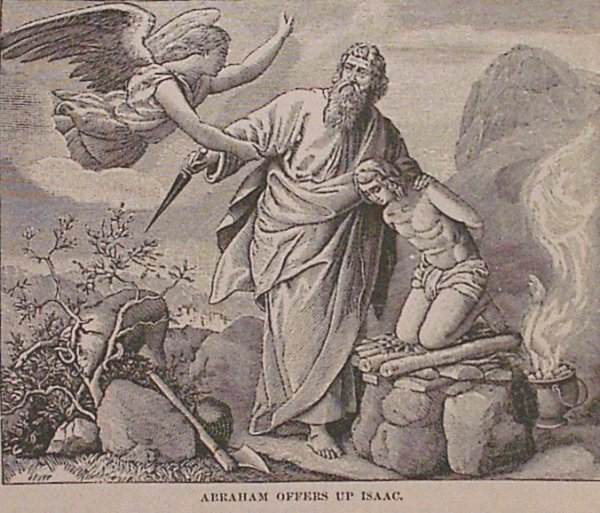
In the pantheon of weird stories in the bible, the Sacrifice (or Binding) of Abraham is often treated as the most inexplicable or as the clearest evidence of how capricious the God of the Old Testament is. However, it seems to me that these conclusions simply demonstrate our poor understanding of history, God’s ways and human nature.  In context and with a decent concept of human nature as well as a proper understanding of what God is about, the story and it’s moral aren’t so hard to understand.

The reality is that infanticide has always been part of human behavior. It’s been practiced everywhere and through all time periods. Including during the time of Abraham. In fact, there is evidence from both ancient writings and from archaeology of wide-spread infanticide and ritual child sacrifice in the Ancient Near East continuing into Greco-Roman times. Continue reading “The Sacrifice of Isaac . . . Or Provincial Much?”

Does God Get Angry?


If you haven’t contemplated murder, you ain’t been in love. ~ Chris Rock

“I will turn my beloved people over to the power of their enemies. The people I call my own have turned on me like a lion in the forest. They have roared defiantly at me. So I will treat them as though I hate them. The people I call my own attack me like birds of prey or like hyenas.” ~ God (Jeremiah 12:7-9)

Over the weekend I happened to come across an email I had sent my husband a couple of months after he left me and the kids. (Background here and here.) It was just a short note rejecting his request that we strive to be on friendly terms. Not that I wanted to be in conflict, but I wasn’t going to pretend to be OK with someone who had treated me the way that he had. In fact, I think it would have been really unhealthy for me to agree to be friend-like under the circumstances. I was very, very angry and I had a right to my anger. I had been betrayed, rejected and turned on by someone who I had done my best to love unconditionally through thick and thin. Emotionally, I was not in any condition to have anything more than a cold, barely cordial relationship with him. (As always, I am speaking of my own perspective here. My husband could give you an encyclopedic list of all the ways he feels I wronged him as well.)

During those days in between praying fervently for God to hit my husband with a bus, I was often grateful for the words of 1 Corinthians 13:5: “Love is . . . not easily angered.” It meant that there was room in love for anger. The two aren’t mutually exclusive. I hadn’t turned into a terrible, hateful, unloving person because of my anger. I didn’t have to be afraid of it or deny it or hurry up and get rid of it. In fact, being so angry was a legitimate part of being a loving person. I knew I would be able to work through it in time. Continue reading “Does God Get Angry?”