Happiness and Starving People

People starve to death. It’s a thought which haunts me, although I’m a bit embarrassed to admit that it’s not for the reasons you might think. It’s a reality that haunts me every time someone tells me that things have to turn around soon. Or when I want to comfort myself with the idea that eventually spring comes, the sun returns and nothing lasts forever. “Weeping may last through the night, but joy comes in the morning.” People starve to death. Tell a man or woman who watched their child starve to death that spring comes again each year. And that’s what haunts me – if people starve to death, then there’s no reason to think my in-comparison small problems will ever right themselves.

Yesterday my husband told me about a story he had read about a horrific attack on a little boy in Bangladesh. The boy was terribly maimed and the family had to go into hiding at a military installation due to ongoing threats from the local gang leaders responsible for the attack. My husband said one of the most striking things about the story for him came from the boy’s devastated father. Bangladesh is a poor country and the family lived in a one room tin shack in a slum. And the father told reporters that his family had been happy. They had been happy together and in their little community even though they sometimes didn’t know where their next meal was coming from. Today, money is pouring in from around the world to help the child and his family – there next many meals are guaranteed. But the father told reporters that his family had taken everything from them. And my husband said, “I read that and thought, I want to be like that guy. I want to be able to live in the middle of squalor and with nothing and be happy.” Is that a trade you would make – to live in squalor and extreme insecurity in exchange for happiness? Blessed are the poor in spirit, for theirs is the kingdom of heaven. Continue reading “Happiness and Starving People”


First Sunday of Advent – Waiting

I’ve said before that the events which lead to my husband and my separation last year was so intense and sordid that it would have made a great episode of Dateline Special Edition. If only we had no shame and one of us were a homicidal maniac. But, since we enjoy healthy levels of shame and we didn’t devolve into poisoning one another (not that such a thing was never contemplated), it’s a story which will have to wait ’til the great by and by to be widely disseminated. Suffice it to say, it wasn’t really anything either of us did that pushed us over the edge. Rather, it was the way the response to events unfolded which undid us.

In his book, Passionate Marriage, Dr. David Schnarch says that couples are pretty much always working at about the same emotional level. It’s why they are able to bond to each other. Couples who are a mismatch in terms of emotional depth, maturity and functioning who somehow marry each other nearly always end up with a failed marriage within the first two years. What happened with us, and what I believe happens to many couple facing an intensely traumatic experience, was that as we coped (or didn’t cope) with what was going on, we were jolted into wildly different places emotionally speaking. Instead of being matched and basically moving forward and growing up emotionally in the normal push and pull ways that couples do, we were suddenly completely out-of-sync. And within two years, our marriage was kaput.

Of course, we’re back together now although I can’t begin to say that everything is fixed. Instead, we seem to have stumbled into a way forward which is familiar to any serious Christian: waiting. We’re just waiting. Waiting for the other to work through their issues. Waiting for greater empathy and understanding to form. Waiting for time to take away the sting of the past. Waiting.

Waiting on God and for God is a theme found all throughout scripture. Abram waited. Joseph waited. Moses waited. The psalmists waited. The prophets waited. Jesus waited. The women and the disciples waited. We still wait today through dry times and unanswered prayers and silence that as a psalmist said is like a dark cloud God wears about him. As Christians, these waiting times are frustrating. We know that somehow this waiting is for a reason. Usually. Maybe it’s for our benefit. Or maybe it’s because there’s a problem elsewhere that needs to be worked out. Which is part of the frustration – we don’t really know. Continue reading “First Sunday of Advent – Waiting”

Thanksgiving Family Survival Guide

An oldie but a goody! BTW, I have something you’re going to love in the works for y’all. If you enjoy the advice I share here, you’re going to love The Upside Down World’s Guide to Enjoying the Hard Life. It’s a collection of enlightening essays for thinking better, being better and growing where you’re planted. I’ll be taking pre-orders for delivery well before Christmas starting after Thanksgiving. At only $5 it’s the perfect stocking stuffer. (The price will go up to $6 a copy after publication.) If you’d like a sneak peak, just send your email address to ratrotter73@yahoo.com and I’ll hook ya up. In the meantime, Happy Thanksgiving, all!

Since I am a contrarian at heart and everyone and their brother is doing the “Let’s talk about what we’re thankful for” bit, I’m going to offer up something completely different.  Because as important as gratitude is, I also know that on Thanksgiving there are an awful lot of people for whom the answer to “what are you most grateful for?” is “that I don’t live any closer to these people.”  So for those of you going over the river and through the woods to grandmother’s house which had damn well better have a well stocked liquor cabinet waiting, I’ve dug through the archieves to create The Upside Down World’s Thanksgiving Survival Guide:

1. Develop an Appreciation for the Absurd: My grandmother once had to be dragged away by a horrified aunt from her very concerned inquisition into the causes of my obesity.  One of my cousins made a big deal out of being “sorry we didn’t get a chance to talk” after resolutely ignoring every smile, nod, wave or question we threw her way from the next table over at my brother’s wedding.  Learning to laugh is a much better tactic for dealing with people being absurd than any other I know.

2. Learn to Tolerate Conflict: Wishing you would have stood up for yourself is only rarely less painful than the discomfort of conflict.  The determining factor being whether you hold it together long enough to cry in private or abruptly leave the table after bursting into tears in front of everyone.  Thanksgiving probably isn’t the best time to confront your family with a list of all the things they have done to hurt you, but being able to speak up for yourself is a form of self-care everyone needs to know.

3. Learn to Avoid Conflict: At the other end of the spectrum, sometimes we need to tone it down.  Not every confrontation need to happen and not every invitation to conflict needs to be accepted.  Learn to see the difference and how to stop it before it gets started.

4. Deliberately Look For the Good in People: Thanksgiving with relatives is the perfect place to put this idea into action.  One of my grandfathers used to corner us Continue reading “Thanksgiving Family Survival Guide”

When My Beloveds Talk Together

I’m going to tell you strange things today. Like about the times early in my marriage when I prayed to God, telling him about the pain of being married to another broken human being. I brought to God things I had never said to my husband because I knew he wouldn’t be able to receive them. And it happened more that once that my husband came home from working so hard to take care of us and said, “today, I really felt like God was telling me . . . ” And nearly word-for-word what I had said to God came out of his mouth. It turns out that the man who God provided for me has an uncanny ability to listen and hear God. It wasn’t the last time he would tell me things he had no way of knowing.

But one of the strange things about this life is that as much as we might want and seek after God as a way of protecting ourselves from the chaos and pain of life, it just doesn’t work that way. In time when the blows of life finally overtook us, this marriage of ours fell apart. I’d always said that we’d either end up as one of the world’s great love stories or self-destruct in a truly spectacular fashion. For a long time, it has seemed that the latter was our fate. It wasn’t that we stopped trying – far from it. In fact, in the middle of our worst arguments, my husband began to stop to pray and listen to God. I followed his lead and began doing it as well.  We became the only couple in all of creation perhaps that would actually stop to seek God in between throwing accusations and curses and venom at each other. And yet, even with both of us seeking after God, our marriage continued to devolve.

Only I’ve discovered that hearing God isn’t enough. In communication there is what is said, what is heard and what it understood. And it turns out that one must know God better than we humans actually know him to understand what he is saying. I learned this when one day my husband told me, “be careful – God told me that there are two voices you are hearing.” The way he said it made it clear that he thought I was being deceived. This was his own belief – that I was wrong and refusing to deal with reality. He thought God was confirming this. Only unbeknownst to him, I had been praying regularly to God complaining that I was no longer sure if I was listening to Him or just hearing what I wanted to hear – talking to myself. Over and over again, I had asked, “how do I know that when I think I hear you, I’m not just hearing what I want to hear?” And he answered me – “you’re hearing two voices.” I knew what it meant – you’re not just talking to yourself. But my husband, working with a different set of assumptions and knowledge, took away something totally different. As we can see perfectly well with all the people who know God’s word yet know little of love, simply hearing God is quite different from understanding Him. Continue reading “When My Beloveds Talk Together”

Why I don’t consider abortion when voting

Let me be clear up-front: I do not support a right to abortion on demand. In fact, if I were made ruler of the universe, I would make abortions enormously difficult to get. Because I’m a mean and cruel woman. No, not really – I’m actually very kind and empathetic. But I am in agreement with Mother Theresa: “it is a poverty to decide that a child must die so that you may live”. I don’t think abortion is an answer to what is really a societal failure. I don’t only oppose abortion from a pro-life perspective. I think abortion is bad for women, worse for relations between men and women and displays a level of animosity towards women as they are – people whose bodies can start new life – which is evil and vile. If we have a society where the normal functioning of a woman’s body regularly ruins women’s lives, we’re doing it wrong. And abortion doesn’t do anything to fix that – it simply enables it. Nearly 60% of abortions are influenced by pressure from fathers, husbands, boyfriends or others with power in a woman’s life. That’s not empowering. Nor has ready access to abortion resulted in a world where people who shouldn’t have children don’t as abortion proponents used to argue. Far from it. And yet . . . the issue of abortion has nothing to do with how I vote.

Yes Democrats not only support abortion rights, but celebrate them the way most of us celebrate Grandpa’s 90th birthday. But despite using the abortion issue to garner votes for the last 30 or 40 years, Republicans haven’t and won’t do anything to stop abortion either. Sure, they’ll fiddle around the edges and I’d much rather live in a country where doctors don’t deliver a baby up to its neck before suctioning its brains, crushing its head and completing delivery. But show me one child who is alive today because we banned “intact dilation and extraction”. It’s a symbolic victory at best. The reality is that for all their rhetoric, the Republicans have shown no more willingness to do something about Roe v Wade than their Democratic opponents. If anything, I can at least give the Democrats credit for being honest about their support of abortion as birth control. But voting for someone simply because they claim to be pro-life does nothing what-so-ever to advance pro-life policies. It’s just giving my vote to the person who has set their dog-whistle to the right pitch.

Another reason abortion isn’t a factor in my voting is that abortion is only marginally a legal issue. 1.2 million women have abortions each year. By some estimates, one in three women will have an abortion in her lifetime. Including a good number of women who are Christian, pro-lifers. That’s a social problem. You don’t fix social problems with laws. Social problems get fixed with people. Continue reading “Why I don’t consider abortion when voting”

“What is truth?”

So, are you sick of the arguments yet? You know the arguments – Romney vs Obama. “Job Creators” vs Inequality. Creationism vs Evolution. Pro-Choice vs Pro-Life. Old Fashioned vs New Fangled. Text Speak vs Grammar Nazi’s. Toilet Seat Up vs Toilet Seat Down. Whatever it is, if we can figure out two ways of looking at an issue to divide ourselves into, we do it. And then we argue and argue and argue. We refine our arguments and wonder what the hell is wrong with the people who don’t agree with us. But aren’t you sick of it?

I remember years ago an older, wiser friend told me, “arguments don’t work. You never change someone’s mind through arguments.” At the time I was a bit flabbergasted. If we didn’t argue, how would the other person know they were wrong? And if we can’t get everyone pretty much on board, how do we keep the world from going to hell in a hand basket? I mean, what was the alternative?

Of course, today we have reams of research and endless gigabytes of internet conversations to prove that what my friend told me was true: arguments don’t work. They rarely change anyone’s mind. And I think all but the most die-hard believers are starting to get sick of them.

So what is the alternative to argument? Do we just agree to disagree – you have your opinions and I’ll have mine? And what about truth? Aren’t some things just true and shouldn’t we stand up for and advocate for them? If we can’t argue and persuade our way into some consensus about what’s true how can we function together to get anything done? The live and let live concept sounds fine until we need policies to get the economy going or fix serious social problems. Then what? Continue reading ““What is truth?””

A Christian Feminism*

When I first started looking at the issue of women in the bible, I wasn’t attached to any particular set of ideas about women and men. As a child of our times a more egalitarian ideal made a lot of sense to me. But I also knew that we get a lot further by conforming ourselves to God’s ways than to our own ideas. I wasn’t closed off to the idea that a subordinate role for women was something I would need to make peace with.

In fact, it was trying to make peace with a subordinate role was what motivated me to study women in scriptures. I figured that if I could learn more about what God had to say and why, the idea of being under men would not be a source of pain, but would be a source of life, as all things which come from God are. Like many, many women I’ve heard from over the years, I wanted to have peace about this subject, but something deep in me kept rebelling at the idea that God had given me the role of less-than all my life.

If you read what I have written previously, you’ll see that the more I studied the matter, the more it became clear to me that using scriptures to demand that women take their place under men was an abuse of God’s word. At a bare minimum, it was blazingly clear that there is nothing in scriptures which would bar full equality between men and women. So, you can make an argument for a subordinate position for women from scripture. And you can make many, many arguments for the equality of men and women which rely not just on a few verses, but stories and themes found all through scripture. Both arguments can be made, so the real issue isn’t which on is biblical – they both are, if you just look at it a certain way. Either way is faithful to scriptures. As always, all that is left now is our own choices.

Continue reading “A Christian Feminism*”

Allow Me to Screw Up Your Sex Life a Bit

“We monks do not try to repress our sexual passions . . . Woe to those monks and nuns, who shovel into their subconscious their sexual passions. . . There is no spirituality in that. What happens, and what we aim at, is the transmutation of erotic energy from earthly attractions to God.” – Father Maximos quoted in The Mountain of Silence: A Search for Orthodox Spirituality by Kyriacos C. Markides

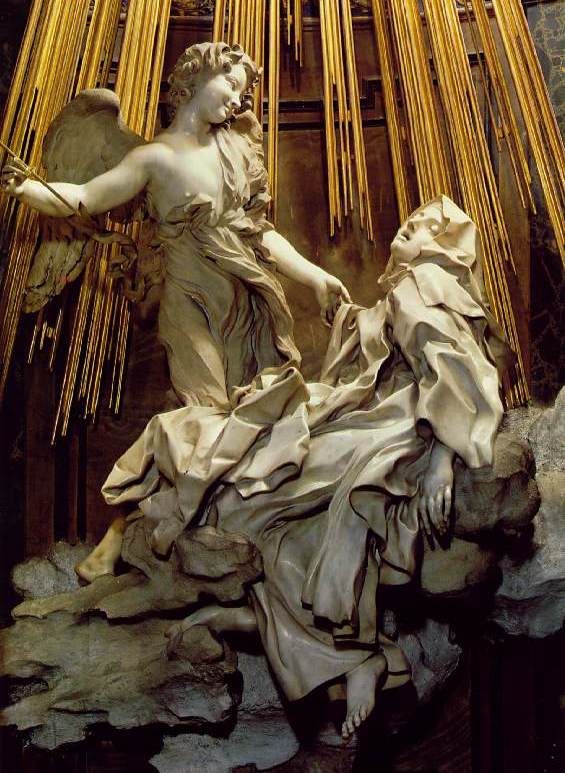
In the old pagan world, sex and religion were all tied up together. Temple prostitutes and depictions of group sex on ancient Hindu temple walls and all that. Christianity has too often taken the opposite tact – sex as being so unholy that for a while it was considered a sin even in the context of marriage by the Roman church. Which led to possibly the most dysfunctional set-up ever; putatively and sometimes actually celibate priests being told each time a parishioner had sex with their spouse. What could be the problem with that, eh? Although the actual rejection of sex by the Christian church has varied wildly from place to place and time to time, the reality is that a lot of people continue to see sex and God as inevitably belonging in two separate spheres of our lives. To the extent that God and sex intersect, it is in the parsing out of rules for sexual conduct. But when actual sex takes place, well if our guardian angels could please exit the room, that would be great. And surely God has the good manners to turn his head for a few minutes. Wouldn’t want to be caught in flagrante delicto by the creator of the universe. That would be too weird. Continue reading “Allow Me to Screw Up Your Sex Life a Bit”

Loving Yourself, Loving Your Neighbor

Several years ago, I had an odd experience while in prayer. I don’t remember what I was praying about, and I’m afraid my explanation won’t do it justice, but the essence of it was God showing me what he loves about me. This wasn’t a generic “love of God washed over me” experience. Rather it was quite specific; God was showing me the particulars of how I am “fearfully and wonderfully made”. These were things about me that are precious to him and that he has purposed into me. Not only would I not be me without those things, but God would not be able to use me according to his purposes if I did not possess them. But here’s the rub: all of those things God showed me have caused me a great deal of difficulty and pain. I had often wished I could change or even be rid those things altogether. Or at least have them be less-so. And as he showed me these things, it was the gap between God’s love for how he has made me and how I felt about it that really struck me.

At the time that this happened, I had a spiritual advisor who I met with monthly. When I shared this experience with her she murmured, “the touch which reveals desolation.” Yes. That it was. (I forgot to ask her where the phrase was from and have never been able to find its source. If anyone knows, please do share!) You would think that having God show me these things as what he most loves and finds precious about me would have changed how I felt as well, but it’s never quite that simple. (My infuriating complexity would be one of those things God pointed to, of course. “You have hidden these things from the wise and learned” indeed.) Instead, what that touch did was say, “this is my view of you. I want you to learn to view yourself the same way as well.” Continue reading “Loving Yourself, Loving Your Neighbor”

Suffering and Stories

“Then it was you who wounded Aravis?”

“It was I.”

“But what for?”

“Child,” said the Voice, “I am telling you your story, not hers. I tell no one any story but his own.”

~ The Horse and His Boy, C.S. Lewis

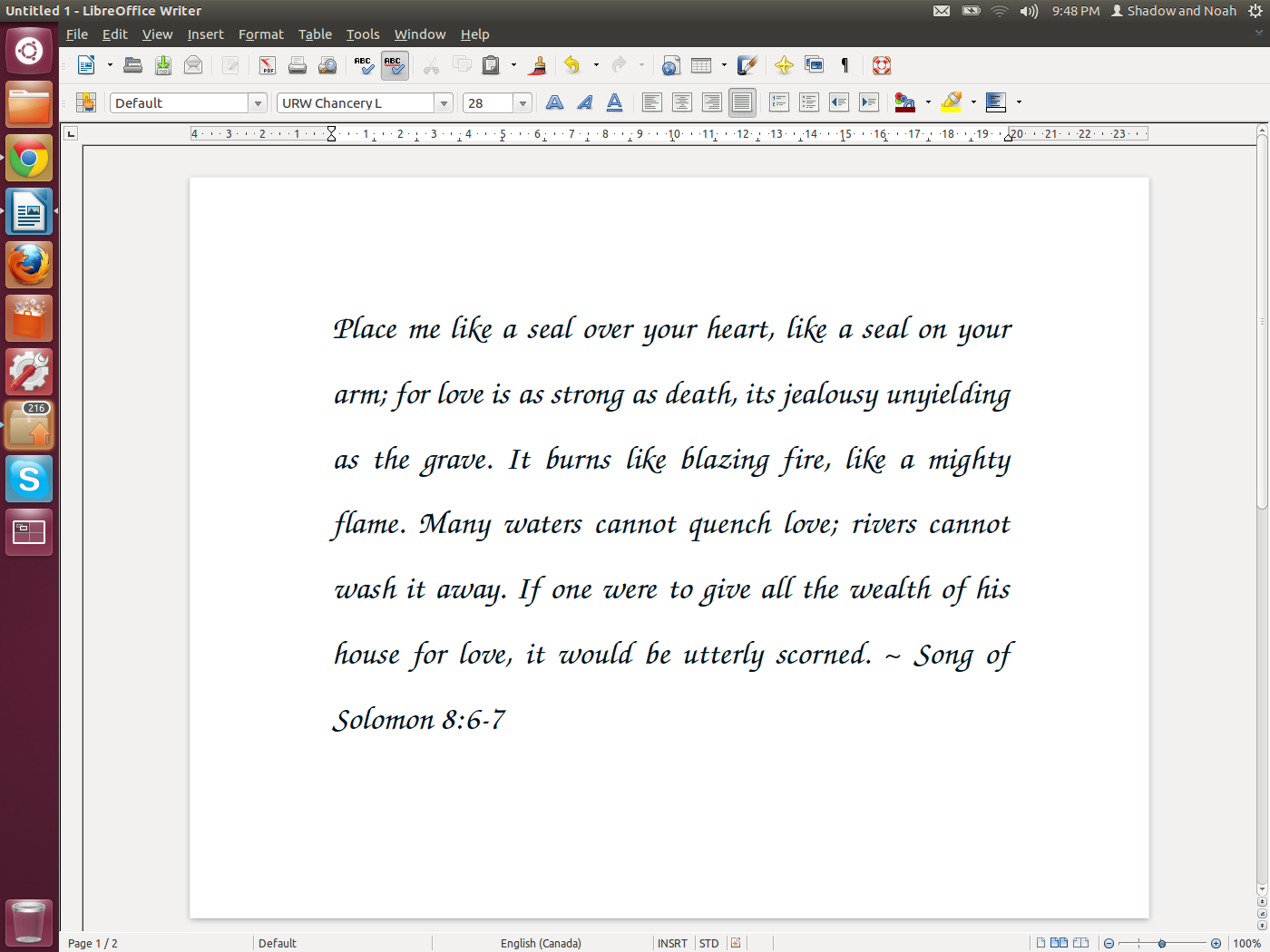
This will probably sound absurd, but there have been times that I have found myself seriously affected by the suffering of people I have never met and could do little or nothing to help – sometimes to the point of sitting up at night crying. War crimes victims, tsunami survivors, women in Afghanistan, parents of starving children. Such are the perils of being ridiculously sensitive. What finally helped me to avoid being emotionally overrun by the terrible suffering which plagues this world was the passage above. The Christ character of the Narnia Chronicles, Aslan, is explaining to the young Shasta a series of difficult, frightening and seemingly unfair events that had occurred. When Shasta asks about his friend, Aravis, he is informed that’s part of her story. I love that concept. We all have a story to live. “I am telling you your story, not hers. I tell no one any story but his own.” Those people who live on the other side of the world and are suffering sometimes unspeakable things? They have stories to live as well. Continue reading “Suffering and Stories”