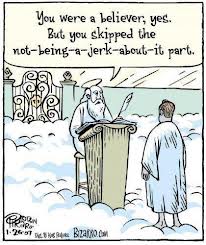
Disbelieving Forgiveness

Sorry for the long silence. I’ve been dealing with some heavy stuff here. I think it’s getting better. Prayers are appreciated. Or if that’s not really your thing, cash is always an acceptable alternative. 😉

Today, I want to talk about what happens when we refuse to believe we are forgiven. Like everyone else, the people around me have sometimes treated me in ways that weren’t the best or even done outright awful things which I then needed to forgive. Fortunately for me, forgiveness has always come fairly easily. If nothing else, my self interest kicks in and I realize that the benefits of letting go of the wrong far outweigh whatever payoff I might get from hanging onto my hurt. In doing so, I’ve learned a lot of valuable lessons. That what other people do is about them and not me, for example. And that it’s easier to recover from being hurt than it is to recover from the way the fear of being hurt warps us.

However, I have often been befuddled and frankly, hurt, over the years that some of these same people who I have readily extended grace to for some pretty major things were often unwilling to extend grace to me for relatively minor faults and failings. For a while I thought that maybe the problem was that the sort of people who required extreme grace were also the sort of the people who were just kind of jerks anyways. However, over the last couple of years, I have discovered that there has been something entirely different at work.

What I’ve learned is that either because I didn’t communicate it well enough or they still felt guilty or the easy grace seemed too good to be true, a few of these people didn’t believe that I had really forgiven them. They believed that even if I had openly communicated forgiveness, in my heart, I was secretly angry, hostile and score keeping. Which made it easy for them to see my (numerous) faults and failings as evidence of hostility, passive-aggressive revenge or withholding. The truth of the matter is that I’m just far more flawed than these people may have realized. Continue reading “Disbelieving Forgiveness”

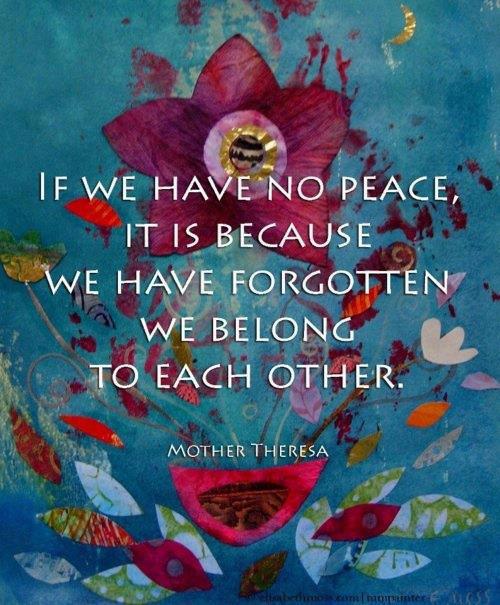
Moving From “Me” to “We”

If you are an American Christian, odds are really, really good that at some point you have been told that as you read scripture, you should try inserting your name for the word “you” in parts of scripture where Israel or God’s people are being addressed. So, I could read, “Rebecca shall be a crown of beauty in the hand of the LORD, and a royal diadem in the hand of her God. No longer will they call Rebecca Deserted, or name her land Desolate. But Rebecca will be called Hephzibah, and her land Beulah; for the LORD will take delight in Rebecca, and her land will be married.” (Isaiah 62:4) It’s not a terrible idea; sometimes we do need help personalizing scriptures and realizing that the love expressed applies to ourselves. Of course, if you do this, eventually you will end up with something like “Rebecca also took her beautiful jewels made of My gold and of My silver, which I had given her, and made for herself male images that she might play the harlot with them.” (Ezekial 16:17) Which is a little too personal maybe.

Now, if your pastors/teachers are any good at all, they have probably also taught you that in nearly all of the places where God speaks to “you” or even where Paul and Jesus address “you”, unless a specific person is being addressed, the word used indicates a plural you. So it’s more of a “y’all” than “you, Rebecca, sitting over there eating jelly beans.” This ought to be obvious as usually the word “you” is being used to address the nation of Israel or an entire church or the group of people being spoken to. But we Americans are notoriously hyper-individualistic. So with or without a anyone’s encouragement, we do tend to read scripture as if it were speaking to us individuals rather than to a collective group.

A while back, I became convicted that the hyper-individualistic programming of our culture isn’t compatible with Christianity. I matter as an individual, but I am also part of a larger body. My life is not for me alone, but for the good of God’s Kingdom – a Kingdom which encompasses all of creation. If I see my life and my faith as primarily about me, I am very much mistaken.

What I came to realize is that countering hyper-individualism isn’t just a matter of prioritizing social justice or even church fellowship. Rather hyper-individualism hides very deep truths about our identities, our purpose and even the meaning of our lives from us. Because the truth is that my life isn’t about “me”. My life and your life and the life of every other human on the planet is about “we”.

Now, that might sound like some new-agey, mumbo-jumbo, but it’s actually very deeply embedded in scripture. Continue reading “Moving From “Me” to “We””

Worst Clobber Verse EVER – Christian Patriarchy Edition

In a more perfect world, the title of this post would be complete jibberish to all of my lovely readers. But alas, we live in a world which is in the process of being redeemed, so some of you know all too well about Christian Patriarchy and clobber verses. However – joy of joys! – we live in a world which is in the process of being redeemed and I know that some of you have no idea what Christian Patriarchy or clobber verses are. So, for the blissfully uninitiated, allow I to explain a bit.

At its simplest, Christian Patriarchy is the teaching that there is a God ordained hierarchy in which men are over women and children. A daughter is under her father’s headship until she marries and responsibility for her is transfered to her husband. Ideally in this arrangement, the man is responsible for protecting his wife and daughter from other men as well as providing for her and overseeing her spiritual, moral and personal development. In exchange for this protection and leadership, a female treats her father/husband with respect, obedience and deference. Although this arrangement has been propagated around the world and throughout time irregardless of religion, Christian Patriarchy proponents insist that this is a Christian arrangement rather than just something people have had a tendency to do. Like going to war or practicing dietary restrictions.

A clobber verse is a verse of scripture which is used to provide definitive proof – in the mind of the person using it – that a particular idea or teaching is true, biblical and theologically unassailable. Now I have a few verses which I will use this way all day, everyday. “God is love” for example. What makes a clobber verse a clobber verse is that inevitably, they are pulled completely out of the context they were spoken into. Nearly always, on closer examination the verse in question doesn’t even say what the person using it seems to think it is saying.

Continue reading “Worst Clobber Verse EVER – Christian Patriarchy Edition”

Do You Know How to Feel Loved?

Pretty regularly my three year old Olivia will tell me, “Michaela loves me.” Or Noah or Dad or whoever in the family she’s just been dealing with. Believe it or not, this doesn’t just happen when someone hands her a piece of candy. Often it’s just after being hugged or read a book or being talked with. Just simple things that seem to make her realize that she is cared for. As a mother, I don’t think I’ve ever heard more reassuring words come out of a child’s mouth than Olivia’s, “everyone loves me.”

I know people who would probably think it is unseemly to declare oneself loved. We’re supposed to tell other people that we love them, not proclaim ourselves as loved. Even if it’s sweet for a 3 year old to say such a thing, it would seem weird and awkward for us to say it. However, as much as we tell people we love them – and we should! – what a gift to tell people that we have received and experienced the love they have for us as well. I know from experience – and I’d bet most of you do too – that there is little which is more hurtful than a loved one rejecting our love. To be a parent who realizes that as fervently as they have loved their child, that for one reason or another that child doesn’t feel loved. A spouse whose partner feels unloved after they’ve poured themselves out heart and soul for them. Or a friend who prayed over and sat with a dear one only to hear, “no one cares about me.” As wounding as never hearing, “I love you” can be, “I don’t feel loved” can be even worse. Continue reading “Do You Know How to Feel Loved?”

“Love isn’t a feeling . . . It’s an ability”

One of the things that is both frustrating and fascinating to me is how bad we tend to be at loving. We really think we love people even when we are destroying them. Or we have very loving feelings towards people who experience us as aloof, uninterested and disapproving. We say that another’s happiness means more to us than our own and then make them miserable by trying to impose our preferences and vision for how they should find happiness on them. Just over and over again, we do things which hurt those we purport to love and then get upset with them should they have the nerve to say, “you’re hurting me!”

lovedoesnthurtyouI came across a post today on the blog “The Registered Runaway” that I want to share with you. We’ve all heard that love isn’t a feeling, it’s a choice. But this writer starts with an even better idea: love is an ability. IOW, it’s a skill we have to learn and develop. It seems to me that we are so bad at loving in part because of our old issue of not ever wanting to be wrong. We want to think that we know how to love when we’ve never put in the time and effort it takes to unlearn our mistaken ideas about love and learn how to do it well. So in the interest of education, I’d like to share a few choice excerpts from this lovely blog post “Love is an Ability”:

Most of the time, an ability is not given, it is grown. You have to feed it and nourish it and work like hell to make sure it thrives through each and every season. Love is no different.


I am convinced that saying you love someone doesn’t count as love. I am also convinced that willing your mind to love someone that you’ve never reached out and touched, doesn’t add up to much. . .

You cannot love someone until you know someone and there is a clear-cut difference between knowing of someone and really knowing someone. You can put people on pedestals, but you can’t love them until you know them. You can leave the word love as the lasting residue of your rant, but you don’t love the folks you’re talking about, not really. . . Continue reading ““Love isn’t a feeling . . . It’s an ability””

Love – A Checklist

Everyone likes to think that they are good at loving. After all, we have really strong, loving emotions so surely we must be very loving people, right? But here’s a hint: if the person you love doesn’t experience you as loving, you’re doing it wrong. So in order to help y’all out, here’s a handy-dandy checklist based on the famous 1 Corinthians 13 verses:

Love is patient:

Do you complain that the object of your affection isn’t improving fast enough? Do you get upset that you have to deal with the same problems over and over? Do you wonder why they haven’t gotten their crap together? Or are you willing to allow them the lifetime God has granted them to become who they were created to be?

Love is kind:

Do you assume the best of your loved one? Do you step in to tell them how wonderful they are when they are beating up on themselves – or being beat up on by others? Do you help them write the story of their lives in a way which portrays them in the best light possible?

Love does not envy:

Do you think that your loved one has it easier than you do and resent them for it? When things go well for them do you get upset because things aren’t going well for you? Do you think that they are getting the better part of your relationship?

Love does not boast:

Is it important to you that your loved one recognize your every accomplishment, good dead and sacrifice? Do you feel the need to regularly remind them of what you do for them and how they benefit from being in a relationship with you?

Love is not self-seeking:

Do you have a “what have you done for me lately?” attitude with your loved one? Do you think about the things they could be doing for you, but aren’t?

Love is not easily angered:

Are you quick tempered when your loved one screws up? Are you using your anger to pressure your loved one into keeping you happy? Do you frequently take offense at things your loved one says or does?

Love keeps no record of wrongs:

Do you sometimes throw past errors or intemperate words in the face of your loved one? Do you feel that your loved one is more often in the wrong than you? Do feel that some past sin or error has created an imbalance between you which they need to make up for?

Love does not delight in evil:

Continue reading “Love – A Checklist”

Why We Christians Suck at Loving

Is there something about Christianity itself which leads to the sort of oppression which its adherents have too often been guilty of? You know – the inquisitions, colonialism, slavery, pretty much every interaction we ever had with First Nations people in the Americas. To name a few. The standard answer for western theologians is that the Christian faith and its teachings are not the problem – people’s sinful natures are. It’s the, “well those aren’t real Christians” blow off. However, South Korean theologian Andrew Sung Park posits a more honest – and more helpful – answer to this thorny issue of the convergence of Christianity and oppression. The problem as Sung Park sees it is that we westerners see Christianity as the answer to the problem of the sinner. All have sinned and fallen short of the glory of God, so Jesus came and died for our sins so we can be forgiven and all that. Our theology, Sung Park argues, elevates the needs and concerns of the sinner over the needs and concerns of the people sinned against. And therein lies the problem.
This may seem akin to blasphemy for many Christians for whom the problem of sin and sinners is THE message of Christianity. However, compare our sinner-centered approach to Christianity to the words which Jesus actually spoke.When Jesus started his ministry, this was the text he chose:

“The Spirit of the Lord is on me,because he has anointed me to preach good news to the poor.He has sent me to proclaim freedom for the prisoners and recovery of sight for the blind,to release the oppressed,to proclaim the year of the Lord’s favor.” ~ Luke 4:18-19

Jesus’ most famous sermon – the one which many scholars believe was his “stump speech” – the oratory he gave when he traveled to a new place and crowds gathered to hear him centered on this:

Continue reading “Why We Christians Suck at Loving”

Stuff I Appreciate About Black Folks

Hey – want to watch me stick a fork in an electric outlet? ‘Cuz that’s pretty much the same thing as being a white person who talks about black folks, right? Or at least some would have you think so. But I’m going to do it, because African Americans are forever getting dumped on in our society and are rarely called out for all the things that are great about them.

Now, before I get started, allow me to provide proper cover for myself. For those not in the know, I’m married to a black man. I have 5 mixed race kids and two African American stepsons. So if nothing else, my “I have black friends” creds are actually solid. (I’ve written more about my experience with race here and you can learn more about my $.99 ebook on race in American here.) Of course, there is as much variety among black folks as among any other group of people. I’ve known sweet, shy, reserved black women and loud, sassy, confrontational black women. Macho black men and nerdy black men. And the things I’m going to list here aren’t universal. There are always people who go against the grain. But as a general rule, these are things which I have observed to be common among black folk I have known that are not nearly as prevalent among the white folks I have known.

Of course, every positive trait has a dark side when pushed to far. My goal isn’t to idealize African Americans, but like I said, we continually dump on black folks and discuss problems in the black community. For this post, I’m just focusing on things which I personally appreciate about black folks I have known. So having properly covered my ass, here goes:

1. They respond to your problems with grace and understanding.

Probably because black folks have had to deal with so many really serious, awful problems for so long, they aren’t particularly phased by your problems. Usually they’ve heard or seen it all before – and worse. And if your life is going to hell because you did something wrong, well, the black folks I’ve known probably disapprove of your dumb choices as much as anyone else. But they also know that you’re the one who is going to have to live with the consequences of your dumb choices, so there’s really no point in piling on. Better to help you move forward than waste time berating you much less exacerbate the problem by turning you out. In my experience, if your life goes all to shit, you’re much better off going to your black friends or a black church for support than to your average middle class white person or church. Continue reading “Stuff I Appreciate About Black Folks”

“If Any Man Come to Me and Hates Not . . .”

Yup. I'm about as intimidating as this guy here.
Yup. I’m about as intimidating as this guy here.

Back when I was 18, I had two different guys I dated break up with me and give me the exact same reason: I was intimidating. That’s the word they both used. Which is really weird. I’m about as intimidating as a tree sloth. Which is to say not in the least. Now if they had said I was sloppy or spent too much time sleeping or wasn’t ambitious enough, that I could have understood. (See – like a tree sloth!) But intimidating? Hardly.

Interestingly enough, it turned out that both of these young men felt intimidated by me for the same reasons. I didn’t drink. I didn’t smoke. I didn’t view making money as the most important goal I could have for my life. And they did. Now, I had never criticized either of them for these things. Not even obliquely. They drank. I didn’t. No big deal. I never asked them to stop, never said I didn’t want to be around them when they did, never spoke poorly about people who drank. Nothing. The same with smoking for the one who smoked. The same with money. But both of them were intimidated by me because of this.

What was really going on was that by not sharing in their behaviors and priorities, I wasn’t affirming them. If I had been critical, they could have just blown me off as a stick-in-the-mud. If I had tried to get them to change their behavior or priorities, they could have told me to mind my own business and leave if I didn’t like it. So when I also didn’t criticize or judge them for the ways they were different than me, they didn’t have anything to react against in order to self-affirm. But I didn’t do those things. Instead I was content to let them be them and me be me and just enjoy each other’s company. Which meant all they had was themselves. And there was something in both of them that wasn’t entirely comfortable with their own choices and priorities. Being around me made that discomfort harder to ignore. It made them feel less confident and sure about themselves which was why they experienced me as intimidating. Continue reading ““If Any Man Come to Me and Hates Not . . .””

The Emotional God

Hey folks – I’ve been trying to write all day and it’s just not happening. I think I’ve written and erased a good 3500 words. Good practice, I suppose. But I probably should have just folded the laundry that’s piled 6 loads deep on the couch. The truth is I’ve been struggling pretty badly lately and that’s never good for my writing. Or much of anything else. I’m just . . . I don’t even know what to say except I’ve just had it. And that re-incarnation had damn well better not be true because if I ever have to do this shit again, I’m gonna be pissed. And I’m going to be a nasty, evil, vile person ‘cuz I’ve tried it the other way and it hasn’t done me a damn bit of good. So, if you could spare a prayer for pitiful me, I’d appreciate it. Maybe God will respond to y’all cuz he’s sure not answering me. OK, that was my pity-party way of saying that I have another repeat for ya. Usual “it’s one of my favorites and most of y’all didn’t read it the first time” disclaimers apply.

A couple of years ago, I was sitting on my front porch steps after dinner, watching my two oldest daughters playing and complaining to God in my head.  I don’t remember what it was (nothing too serious), but the husband had done something to chap my hide.  As I wound down my complaints and let the whole thing go, I asked God in an almost off-handed way, “do you ever have to deal with people treating you like this?”  At which point I’m pretty sure all of heaven burst into hearty guffaws.  But soon a funny thing started happening: as I dealt with people in my life, often some parallel experience between God and people would pop into my head. Continue reading “The Emotional God”