John the Baptist Says to Stop Being an Arse

Some of you will recall that I was raised Catholic. So each week at mass I would listen to a reading from the Old Testament, the New Testament and the Gospels. And at the end of each the person reading would intone, “The Word of the Lord” and we’d respond together in monotone: “Thanks be to God.” Because we were so excited.

Now, I understand the intent of this little ritual and I truly do offer thanks to God for his Word. But now that I’ve actually read the bible myself, I kind of think that all of heaven must occasionally roll their eyes and guffaw at this response to scripture. Like say that day’s Old Testament reading was from 1 Samuel 6 where the Philistines have stolen the Ark of the Covenant from their neighbors and been duly smited. To set things right, they are instructed to “make models of their tumors” as well as of rats out of gold to give to the Israelites when they return the object. Can you imagine? Make models of your tumors? You cannot tell me that the Israelites didn’t laugh their asses off at being given a bunch of gold lumps cast from the Philistine king’s goiters. And we respond with the same old monotone “Thanks be to God” in such a way that makes it clear that we’ve missed the joke entirely. Once again, these stories and poems and words, so filled with beauty and passion and humor just get flattened into monotony and so lose their power. It’s kind of sad the way we do that (and no – this is hardly a Catholic problem!).

I was thinking about this last night while reading a story about John the Baptist which really, could have come right out of a Monty Python skit:

And the crowds were questioning [John the Baptist], saying, “Then what shall we do?” And he would answer and say to them, “The man who has two tunics is to share with him who has none; and he who has food is to do likewise.” And some tax collectors also came to be baptized, and they said to him, “Teacher, what shall we do?” And he said to them, “Collect no more than what you have been ordered to.” Some soldiers were questioning him, saying, “And what about us, what shall we do?” And he said to them, “Do not take money from anyone by force, or accuse anyone falsely, and be content with your wages.”

Can’t you just see it – here’s this wild-eyed crazy man out by the river and people come to ask him what they should do to be saved from the coming wrath. He leans in, maybe puts a stinky arm around the questioner and essentially says, “listen closely – stop. being. an. ASSHOLE.” Like it’s some big friggin’ secret or something. Continue reading “John the Baptist Says to Stop Being an Arse”

Throwing Pennies at God

You know the story of the widow’s mite?  How Jesus said this widow throwing her last two pennies into the collection box was more faithful than those putting in large amounts from their wealth?  I always read the story and assumed that the widow was giving her last two pennies out of reverence.  But lately, I’ve realized that I’ve been that woman throwing her last coins into the Salvation Army bucket.  And it wasn’t often done out of reverence.  When I was younger, I might put my penny in so I wouldn’t feel bad about walking past the bucket without putting anything in.  Sometimes I did put my last coins in as a way of saying, “I know it’s not much, but it’s what I’ve got.  I’ll just trust you to provide the increase.”  A few times though, I put my last coins in as an act of protest and complaint; “You want everything?  Fine take my last pennies.  I do my best, I trust in you and I get left with nothing but a couple of pennies.”

Research has found that poorer people give more of their money away than others.  A lot of that is because the amounts given as often so small that you weren’t going to do much with the money anyways.   It occured to me that maybe the widow wasn’t so sanguine about her life and her struggles either.  Two copper coins wasn’t worth much.   It would barely have bought food for one meal.  And then what?  Maybe that widow too had been walking this path for too long.  Maybe she was more broken than obedient and was throwing those copper pieces as a form of defiance and challenge to God?  Maybe that was exactly what Jesus saw her doing when he praised her action.  I know that if at one of those moments, God had praised those pennies I threw at him, it would have meant everything to me. Continue reading “Throwing Pennies at God”

One Sermon*

preacher3In the minds of many people, the story of Christianity starts at the fall -with sin and our need for a savior. But that’s not true. The start of the Christian story is the secret of our true identities. We are image bearers. Before we are sinners. Before we need a savior. We are a people who bear the very image of God as our identity. When we skip over this truth and go straight to our sin, we allow the work of the enemy rather than the work of God to define us.

Too many Christians participate with this deception of seeing ourselves primarily as sinners. Perhaps this is because sin is what is easiest for us to see from the outside looking in. In scripture sin is usually spoken of in terms of being unclean, dirty, filthy. Sin obscures that core of who we were created to be – images of God himself. But sin can’t change it or take it away. Think of it like a diamond that gets left in a tide pool and becomes encrusted with mud, bits of shells, plant materials, maybe even eaten and crapped back out. The diamond is still there, unchanged. But it has been completely encrusted with filth until there is no remaining visible sign of it’s existence.  There are many verses in scripture which speak of our sins being washed away. We are washed in the blood of Christ. And once those sins are washed away, what is revealed? Who we really are – images of the God who created us.

This is what salvation is. Continue reading “One Sermon*”

The Christian’s Role in Society

Perhaps it’s inevitable, but the older I get, the more radical I seem to be becoming. It all comes from thinking that Jesus really meant all those crazy things he said and, you know, actually wants us to do them. I mean a lot of effort has gone into trying to put the Jesus stamp of approval on the comfortable American dream and a lot of people are happy with the result. But the red letters are still there in the bible. And all it takes is to try to follow a few of them for a person to be changed and their American dream to be upended – or for them to end up with a really screwed up life if you’d rather see it that way. I’m not sure exactly why we are so convinced that a good and comfortable life is what we get when we follow in the footsteps of a man who was tortured, killed, betrayed, abandoned and mocked. It’s a bit of a disconnect to be sure. But then again, who wants a screwed up life? Better to just sign up for your “get out of hell free” card and sit tight ’till you kick the bucket, I suppose.

But anyways, what I was saying – or meant to be saying – was that I’ve become more of a radical as I’ve gotten older. And part of being a radical is that you’re prone to being rather unrealistic. Like maybe you embrace pacifism. Or you decide that you shouldn’t have sex with anyone you’re not in a permanent, covenant relationship with. Or you’re going to take what you need to exist on from your paycheck and turn the rest over to people in need. Or you’re going to forgive and be in relationship with the man who murdered your daughter. Being a radical makes you a bit of a lunatic, really. Continue reading “The Christian’s Role in Society”

About Those Tickled Ears

“For the time will come when they will not endure sound doctrine; but wanting to have their ears tickled, they will accumulate for themselves teachers in accordance to their own desires, and will turn away their ears from the truth and will turn aside to myths.” – 1 Timothy 4:3-4

As a general rule I do my best to adhere to the policy that one ought to promote what one loves rather than bashing what one opposes. But today, I feel the need to warn y’all about the ear ticklers. “Have their ears tickled” was something of an idiom in ancient Rome which meant that a person was listening for things which were pleasing to them rather than the truth. What people looking to have their ears tickled really had a preference for were ideas which were new or novel. Paul warned young Timothy that the day would come when ear ticklers would be all the rage in Christian circles. And people being people, the accusation of tickling ears has probably been thrown around among Christians who disagree with each other ever since.

Now, I must be upfront and let y’all know that I have myself been accused of being an ear tickler on more than one occasion. If you can believe it. And I’ve noticed that whenever I’ve encountered someone warning about ear ticklers, the underlying assumption is always that ear tickling starts with rejecting a wrathful, condemning, harsh God. For some reason these people seem to be under the impression that it is a common problem that human beings would desire a nice, squishy God whose motto is “I’m OK, you’re OK.” Only I’ve yet to see any evidence of any such thing. Just the opposite, in fact. Continue reading “About Those Tickled Ears”

How Will We Be Judged?

Every once in a while, don’t you wish your life had a 30 second reverse feature? Like for when you spill a cup of coffee on your laptop. Or blurt out something offensive. Or cause an accident while driving. That would be nice, wouldn’t it? A way to deal with those moments when you want to yell “do over!” and try it again – only without the split second screw-up. Now, imagine dying and discovering that your entire life has been one long “I’d like a do-over” experience. That would really, really suck, wouldn’t it?

A lot of Christians like to talk about judgment or judgment day as if they had the slightest idea what happens during judgment. Many seem to think St. Peter’s going to meet us at the pearly gates where he’ll check to see if your names on the list of people who have had a born-again conversion moment like a celestial bouncer. Or there will be a pop quiz: “it’s all or nothing – by whose name are you saved?” Others basically figure it will be like the ancient Egyptians taught with your good deeds and religious devotion on one side of a scale and your sins on the other. A lot of people seem to think that judgment is going to be a simple matter of declaring yes or no on the person being judged. But really, the bible tells us practically nothing about what happens when we die much less the actual procedure for passing judgment on a soul. Which is pretty unfair, really. Shouldn’t we know what the deal is ahead of time so we can dot our i’s and cross out t’s?

Myself, I have my own theory about what happens at judgment. It’s pretty simple: I think that when you die, you get to experience a sort of playback of your life in which you are able to understand everything you did and everything which happened to you and during which you experience exactly how you and your actions affected the people around you. Every time you caused joy and every time you caused pain, you will have that same experience of joy and pain which you set into motion. If you brought joy to people, this will be a wonderful experience. If you spread pain and misery, it will be it’s own torturous experience. If you hurt a child, it would be better to have a millstone tied around your neck and be cast into the sea than to have to experience the repercussions of that act. Continue reading “How Will We Be Judged?”

Ways to Make a Christian Faint

“Christians have always tended to transform the Christian Revelation into a Christian religion. Christianity is said to be a religion like any other or, conversely, some Christians try to show that it is a better religion than the others. People attempt to take possession of God. Theology claims to explain everything, including the being of God. People tend to transform Christianity into a religion because the Christian faith obviously places people in an extremely uncomfortable position that of freedom guided only by love and all in the context of God’s radical demand that we be holy.” –Jacques Ellul

We Christians really are a faithless bunch. Want to send the average Christian – particularly a Christian like a pastor or church elder – into a nervous sweat? Tell them, “Jesus said the world would know his disciples by how loving they are” without adding any qualifiers at the end. No mention of morality or the need for correction. In fact, if you want to send them into a dead faint, point out that the biblical definition of love doesn’t include correction, purity or virtue.

Or tell them that you’ve decided to take Jesus’ instruction not to judge literally. From here on out you’re just going to take a live and let live approach. A person’s choices are between them and God so you’ll just leave the judging to God. You may want to bring smelling salts. If they’re still standing, you can add in that Jesus said we should be perfect like God who causes the rain to fall and the sun to shine on the good and evil alike. So you think we should help anyone in need without regard to whether they deserve it or not. And no making loans – if you’re going to help someone, you need to do it without expecting repayment. That should finish the job.

You could suggest that instead of fighting to protect our rights, Christians should follow Jesus’ teachings and example and refuse to fight. Let the other side defeat us without resisting it. They’ll either give you a blank, uncomprehending stare or quickly escort you off the premises.  On the way out you could add in that God doesn’t really care if you receive or keep what you’ve earned through hard work. Just to make sure you’re never invited back.

Of course, not all Christians are like this. There’s a growing segment of Christians who already have a live and let live attitude. They work hard to be loving, accepting and willing to lose. Not that they have it all together either. Try telling them that no one has a right to inflict the horror of fatherlessness on another human being, so Christians are morally obligated to refrain from sex outside of marriage and to encourage others to do the same. Tell them its a matter of social justice. Be prepared to witness much equivocating. Continue reading “Ways to Make a Christian Faint”

Godly Thinking vs The World

“Encourage one another and build each other up ~ 1 Thessalonians 5:11 Godly thinking believes you can be the person you heart desires to be and accomplish the things your heart longs to accomplish. The world believes you can be the person they want you to be and accomplish the things they think you should want to accomplish. “Do not be conformed to this world, but … Continue reading Godly Thinking vs The World

The Sacrifice of Isaac . . . Or Provincial Much?

Shall I offer my firstborn for my transgression, the fruit of my body for the sin of my soul? He has showed you, O man, what is good. And what does the LORD require of you? To act justly and to love mercy and to walk humbly with your God. ~ Micah 6:7-8

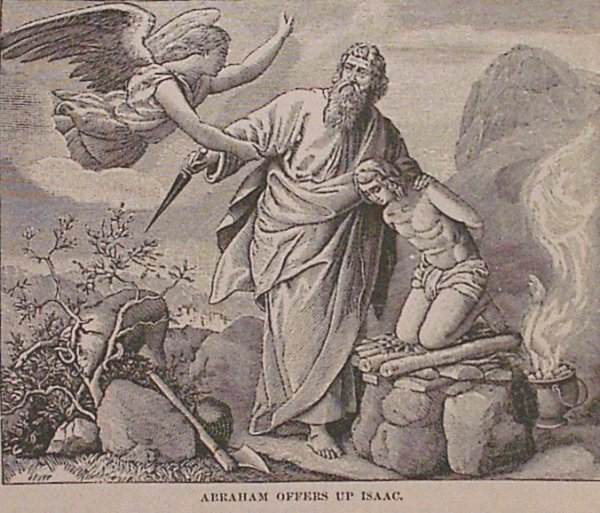
In the pantheon of weird stories in the bible, the Sacrifice (or Binding) of Abraham is often treated as the most inexplicable or as the clearest evidence of how capricious the God of the Old Testament is. However, it seems to me that these conclusions simply demonstrate our poor understanding of history, God’s ways and human nature.  In context and with a decent concept of human nature as well as a proper understanding of what God is about, the story and it’s moral aren’t so hard to understand.

The reality is that infanticide has always been part of human behavior. It’s been practiced everywhere and through all time periods. Including during the time of Abraham. In fact, there is evidence from both ancient writings and from archaeology of wide-spread infanticide and ritual child sacrifice in the Ancient Near East continuing into Greco-Roman times. Continue reading “The Sacrifice of Isaac . . . Or Provincial Much?”

Do you read scripture like a Pharisee or like Jesus?

Way back in college, I took a class on the history of religion in America. One day during a discussion about some Christian evangelist, one of the other students offered this criticism of the man’s work: “it’s like he’s actually trying to be like Jesus.” I sat there a bit bug-eyed. Can you imagine – a Christian who was actually trying to be like Jesus? Whatever could that evangelist have been thinking? (Clearly, not everyone I who attended my college was the best or the brightest.) But the reality is that a lot of people – including a good number of Christians – are as unclear on the concept as this young man back in my college days was. How else to explain the fact that many people read the bible the exact same way that the Pharisees did rather than trying to read it like Jesus did? (For anyone who is really unclear on the concept – the Pharisees were Jesus’ main opponents in the gospel stories. We’re supposed to try to be like Jesus, not like the Pharisees. Just so we’re all on the same page here.)

At the time of Jesus, the Pharisees were experts on the bible. In fact, they had managed to find all the laws in the bible – 613 of them. They had further figured out that there were 365 negative laws – thou shall nots. And 248 positive laws – thou shalls. So they knew all about important rules like thou shalt wash your hands before eating, thou shalt not perform miracle healings on the Sabbath and how long to keep the fringe on their garments. Somehow they had managed to miss those very important rules about card playing, drinking alcohol and dancing. No one’s perfect, I guess. But they had mastered the very important biblical teaching to avoid the appearance of evil. Like they wouldn’t eat with unclean people because if they did, the other biblical rule followers might call them evil. And evil is bad, donchano? (I once attended a church which demanded that members not drink alcohol on the grounds that other church members might be scandalized if they saw you coming out of a liquor store.)

So long before the teaching of sola scripture, the Pharisees were experts in biblical living. If you needed to know the biblical way to weave your cloth was, they could tell you. (Using only one type of fiber is biblical. The Pharisees would not have stood for our unbiblical polyester/cotton blends!) The Pharisees were also very good about setting a good example for other people – praying in public or announcing their contributions to the synagogue loudly. Because it was important to “witness” to those around them so that people would be inspired to honor God the right way, of course. Continue reading “Do you read scripture like a Pharisee or like Jesus?”